

Japanese Futon Bed Benefits: 7 Key Advantages
If you wake up with stiff shoulders or a sore back, your mattress could be the culprit. After nearly four years sleeping on a traditional Japanese futon bed, I can speak from experience: the benefits extend far beyond simple comfort. This time-tested sleep system supports your spine, keeps allergens at bay, and frees up space in your home.
In this guide, you’ll discover the real Japanese futon bed benefits, from spinal alignment to minimalist living. Whether you deal with chronic pain, live in a small apartment, or simply want cleaner sleep, this article covers what you need to know.
Spine-Friendly Sleep Surface

The firm yet cushioned support of a Japanese futon encourages natural spinal alignment. Unlike soft Western mattresses that allow sinking, a futon keeps your body level throughout the night. This is one of the most celebrated Japanese futon bed benefits for anyone with posture concerns.
Encourages Back Sleeping Naturally
The slightly firm feel makes side sleeping less comfortable without extra support. Over time, this gently trains you to sleep on your back, the ideal position for keeping your head, neck, and spine in a neutral line.
- Reduces morning stiffness
- Improves posture during waking hours
- Minimizes neck and shoulder pain
Back sleeping also reduces facial pressure, which can help prevent sleep lines over time.
Balanced Support for All Body Types
Thanks to layered construction with cotton, wool, and natural fibers, the futon molds slightly to your body while maintaining structural support. It feels supportive like the ground, offering even weight distribution for sleepers of all sizes.
Heavy sleepers appreciate the density that prevents bottoming out. Lighter individuals enjoy a snug, cradling feel without sinking too deep.
Allergy Relief Through Daily Airing

One of the most underrated Japanese futon bed benefits is the hygienic design. Unlike traditional mattresses that stay sealed for years, futons are aired daily, which starves dust mites, mold, and bacteria of the damp environment they need to thrive.
Eliminates Moisture Buildup
Sweat, humidity, and breath moisture get trapped in conventional mattresses. Over time, this leads to musty odors and allergen accumulation. With a futon, you unroll it only at night and air it every morning so sunlight and airflow keep it dry.
Daily airing routine:
1. Unroll and remove blankets
2. Open windows for cross-ventilation
3. Brush surface lightly to remove dust
4. Flip monthly for even wear
In summer, hang it outside for an hour per side. UV rays naturally disinfect the fabric. In winter, place it near a heat source to warm and dry it, and never leave it folded for long.
Ideal for Asthma and Allergy Sufferers
Because the futon isn’t a permanent fixture, it doesn’t collect dust mites like a bed frame and box spring. Combined with tatami mats, which have natural dehumidifying properties, this setup creates a low-allergen sleep zone.
Space-Saving Design for Small Homes
Living in a studio or compact apartment? A Japanese futon bed frees up floor space the moment you roll it up in the morning. No bed frame, no bulky base, just a clean, open room ready for yoga, work, or guests.
Maximizes Multi-Functional Rooms
By day, your space becomes a minimalist living area. By night, it transforms into a bedroom. No sofa bed needed, as this system is simpler, more comfortable, and more durable.
- Adds 30 to 50 square feet of usable space
- Perfect for tiny homes, guest rooms, or kids’ rooms
- No assembly or tools required
Even in larger homes, people adopt futons for guest rooms where beds sit unused most of the time.
Minimalist Aesthetic, Maximum Calm
The clean lines and natural materials create a serene, clutter-free atmosphere. Paired with tatami mats, the room feels grounded and peaceful, like a sanctuary rather than just a bedroom.
Tatami adds subtle texture and a soft hay-like scent that enhances relaxation. This is therapeutic design at its finest.
Long-Term Durability and Cost Savings
A quality Japanese futon lasts 5 to 8 years with daily use, and even longer if rotated or used part-time. That’s comparable to high-end mattresses, but at a lower upfront cost.
Built to Last, Not Replace
A well-made futon from a Japanese workshop shows minimal wear even after four years of use. No sagging, no lumps, and no off-gassing or chemical odors.
- Made from natural, breathable materials
- Repairable through select workshops that offer refurbishing
- Lower lifetime cost than premium Western mattresses
Compare that to a $2,000 mattress that starts dipping after three years and ends up in a landfill.
Lower Lifetime Cost
Factor in no bed frame, no box spring, and no mattress protector. Over a decade, the savings add up significantly without sacrificing comfort.
Tatami Mats: The Hidden Upgrade
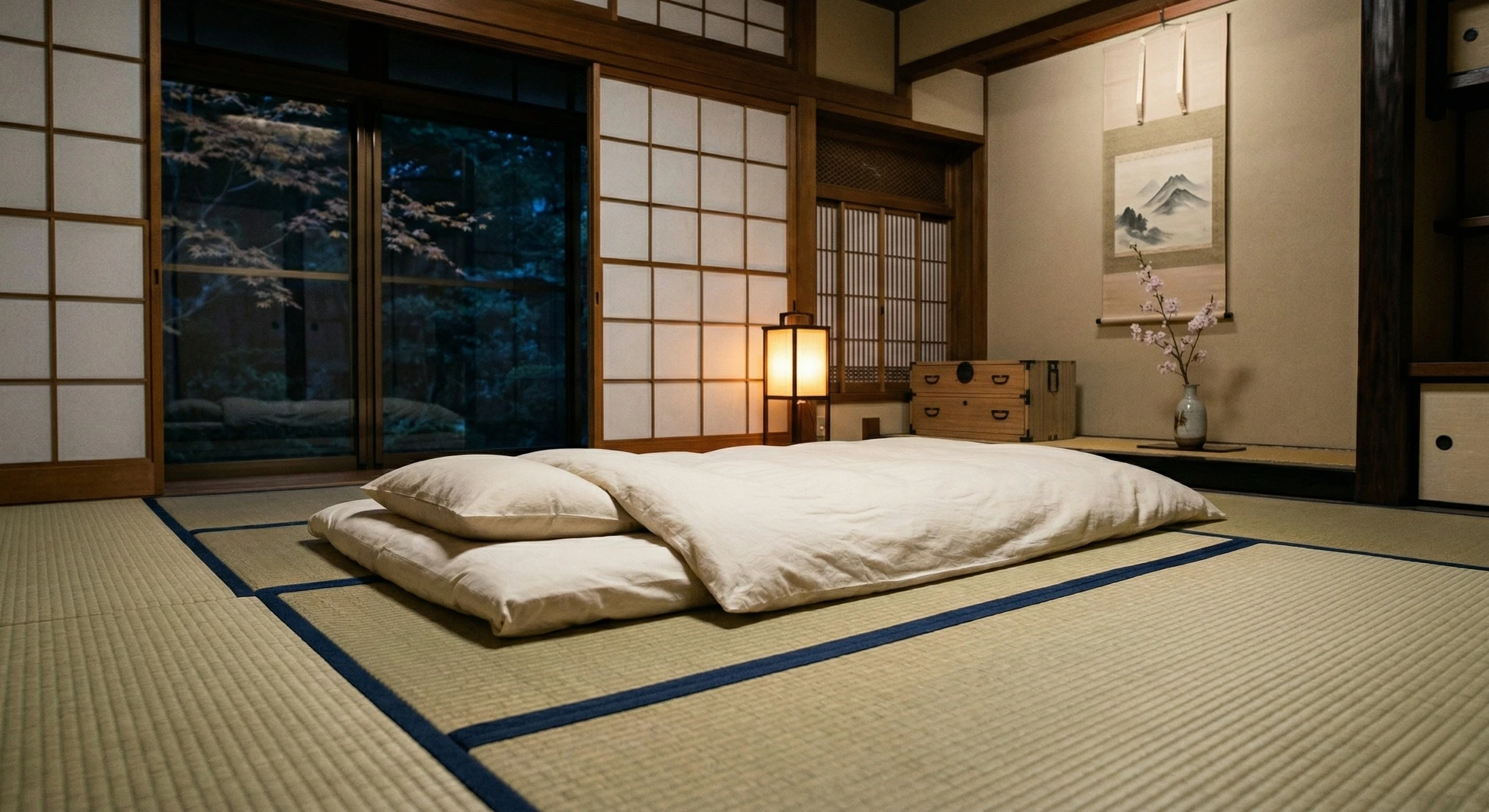
While not mandatory, tatami mats elevate the Japanese futon experience. These traditional rice-straw mats are functional allies in comfort and hygiene.
Regulates Temperature Year-Round
Tatami has natural thermal properties that work with the seasons:
- Cool in summer by absorbing heat and wicking moisture
- Warm in winter by insulating against cold floors
No more cold feet in winter or sticky nights in summer. The mats breathe with the seasons.
Enhances Airflow and Prevents Damp
Tatami creates a small gap between the floor and futon, allowing air to circulate. This prevents condensation and mold, especially important if you live in a humid climate.
Daily Routine: Small Effort, Big Reward
Yes, using a futon requires daily setup and takedown. But it quickly becomes a ritual that anchors your day rather than a chore.
3-Minute Morning and Night Routine
Morning:
1. Roll up futon (1 minute)
2. Store on wall rack or door hook (30 seconds)
3. Air out room (5 to 10 minutes while making coffee)
Night:
1. Unroll futon (1 minute)
2. Smooth and fluff (30 seconds)
3. Add blankets and pillows
Total time is under 3 minutes. It becomes second nature, like brushing your teeth.
Builds Mindful Habits
This small daily action creates structure. You become more aware of your sleep environment and more connected to your space. It’s a form of intentional living.
Challenges and How to Solve Them
No sleep system is perfect. Here’s what to expect and how to manage it.
Side Sleepers May Need Adjustment
Without a plush surface, side sleeping can feel firm at first. But it’s manageable with a supportive pillow, a thin topper for extra cushion, and time to train yourself to back sleep.
Storage Requires Planning
You need a place to store the rolled futon. Options include a wall-mounted rack for the cleanest look, a closet or storage bench, or a door hook for a budget-friendly setup. Avoid leaning it in a corner, as it can warp over time.
Maintenance Matters
Neglect leads to dust buildup or mildew. Stick to vacuuming monthly, sun-drying once or twice a month, spraying lightly with a vinegar solution if odors appear, and freezing tatami overnight if pests are suspected.
Why the Switch Is Worth It
After four years, the Japanese futon bed benefits are undeniable in my daily life:
- No more morning back pain
- Improved posture during the day
- Allergy symptoms reduced significantly
- More usable space in my home
- Deeper, uninterrupted sleep
The only “downside” is rolling up the futon each morning. But that brief ritual has become part of a healthier, more intentional lifestyle.
Frequently Asked Questions About Japanese Futon Beds
Are Japanese futons actually good for your back?
Yes. The firm, flat surface supports natural spinal alignment and encourages back sleeping. Many people with chronic back pain report reduced stiffness and better posture after switching to a futon.
How long does a Japanese futon last?
A quality futon lasts 5 to 8 years with daily use, and longer if rotated or used part-time. Proper care, including regular airing and sun-drying, extends its lifespan significantly.
Can side sleepers use a Japanese futon?
Yes, though it may feel firm at first. A supportive pillow and a thin topper can make side sleeping comfortable while you transition to back sleeping over time.
Do Japanese futons help with allergies?
Yes. Because futons are aired daily and not sealed in a bed frame, they don’t trap moisture or dust mites the way traditional mattresses do. This creates a much lower-allergen sleep environment.
Is a tatami mat necessary under a futon?
Tatami isn’t required, but it adds significant benefits. It regulates temperature, improves airflow, prevents dampness, and enhances the minimalist aesthetic of the setup.
How much space does a futon save compared to a regular bed?
Rolling up a futon each morning can free up 30 to 50 square feet of floor space. This makes futons ideal for studios, small apartments, and multi-functional rooms.
Final Thoughts on Embracing Japanese Futon Bed Benefits
The Japanese futon bed isn’t a passing trend. It’s a time-tested practice rooted in simplicity, health, and respect for space. Whether you struggle with chronic pain, live in a small apartment, or simply want cleaner sleep, this low-to-the-ground solution delivers real results.
It isn’t about hardship. It’s about smart design, a bed that supports your body, your home, and your well-being. If you’re ready to ditch the bulky mattress and reclaim your space and sleep quality, try a Japanese futon. The floor isn’t the enemy. Your old bed might be.
Start small by trying a futon for a month and notice the difference in your posture, sleep, and living space. The Japanese futon bed benefits speak for themselves once you experience them firsthand.