How to Use a Futon: Quick Steps
You have unboxed your new furniture and now face a pile of slats and bolts wondering how to use a futon without breaking it. Many people struggle with this puzzle because the instructions are often unclear or missing entirely.
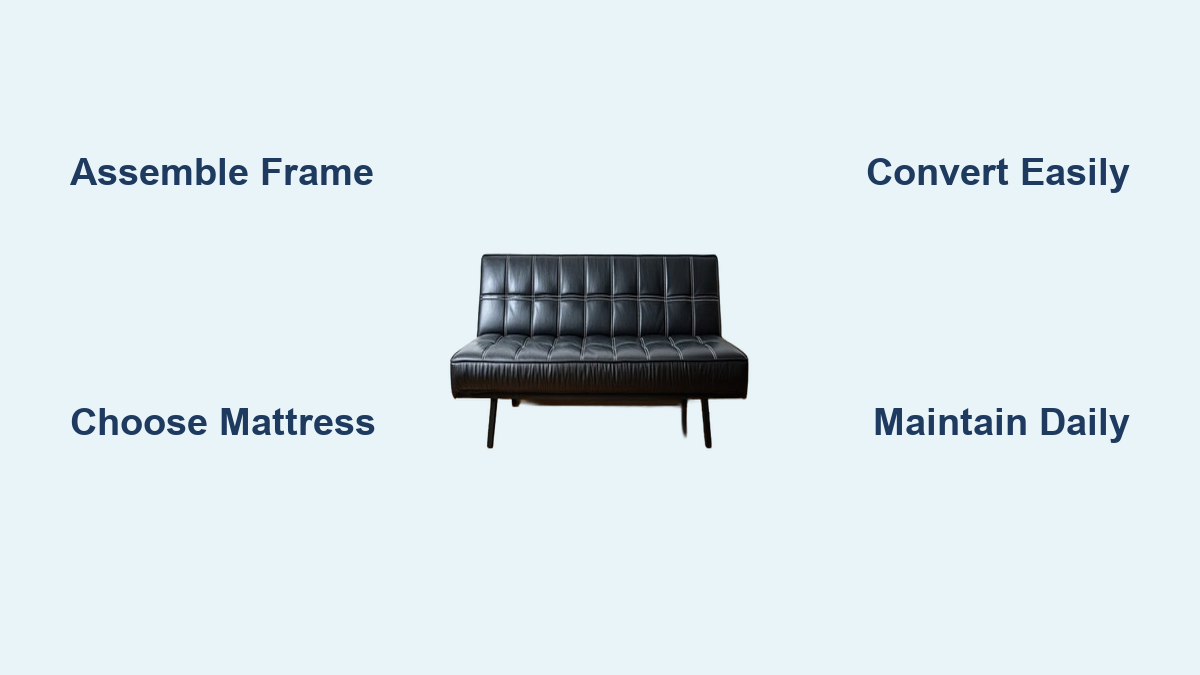
This guide teaches you to assemble the frame, convert between sofa and bed modes, and maintain your investment for years. You will learn specific steps to ensure safety and comfort in your small space.
Assemble the Frame Correctly for Stability

Building the frame properly is the most critical step before you can enjoy your new furniture. Skipping steps or misaligning parts often leads to instability or permanent damage later.
Identify All Frame Parts First
Lay out every component on the floor and match them against your instruction manual immediately. Typical parts include front and back legs, side rails, hinges, and various bolts.
* Check that nothing is missing or damaged before you start building.
* Contact the manufacturer right away if you find any defective parts.
Attach Legs and Side Rails Securely
Start by securing the front and back legs to the side rails using the provided hardware kit. Ensure legs are oriented correctly since front and back heights often differ.
* Make sure bolts go through pre-drilled holes without forcing them.
* Place washers under nuts to ensure maximum stability during use.
* Tighten connections firmly but avoid over-tightening which strips threads.
Install Hinges and Pivot Mechanism
The hinge system allows your futon to fold and unfold smoothly without jamming. Attach the main hinge bar to the backrest frame and pivot brackets to the seat section.
* Install the center support leg if your model includes one to prevent sagging.
* Test the movement early to ensure the backrest folds forward freely.
* Verify that the frame locks securely in place when fully flat.
Choose the Right Mattress for Comfort

Your futon is only as comfortable as the mattress you place on top of the frame. Unlike regular sofa beds, futons require thinner and more flexible mattresses designed for folding.
Measure for Proper Fit Accurately
Standard futon sizes vary slightly so you must measure your frame before buying a new mattress. A mattress that is too small leaves gaps while an oversized one will not fold properly.
* Twin sizes are typically 38 inches by 75 inches.
* Full sizes measure 54 inches by 75 inches.
* Queen sizes usually span 60 inches by 80 inches.
Pick the Best Mattress Type
Select a mattress type that balances your need for support with the flexibility required for conversion. Look for labels that explicitly say “futon mattress” to ensure proper thickness.
* Innerspring: Durable and supportive but heavier to move.
* Foam: Lightweight and affordable yet less supportive over time.
* Latex: Eco-friendly and long-lasting but more expensive.
* Foldable hybrids: Combine layers for a balance of comfort and flexibility.
Avoid Common Mattress Mistakes
Never use a standard box spring mattress because it is not designed to fold repeatedly. Always air out new foam mattresses to remove off-gassing smells before sleeping on them.
* Do not skip the foundation layer if your frame requires a slat base.
* Replace your futon mattress every 5 to 7 years or sooner if it sags.
Convert From Couch to Bed Easily
Switching between seating and sleeping modes should be effortless once the frame is assembled and the mattress is in place correctly.
Unlock the Backrest Safely
Stand behind the futon and lift the backrest slightly to release tension in the hinges. Pull the backrest forward and down toward the floor while guiding it gently.
1. Lift the backrest slightly to release tension.
2. Pull the backrest forward and down toward the floor.
3. Guide it until it lies flat and aligns with the seat section.
Secure the Bed Position
Most frames have a locking mechanism that engages automatically when the bed is fully extended. Confirm that the frame clicks into place and shows no wobbling when pressed.
* Ensure the center support leg is upright and stable if present.
* Consult the manual if the bed does not lock as some models need manual pin insertion.
Smooth Out the Mattress
Adjust the mattress once the frame is flat so edges align perfectly with the frame boundaries. Ensure no wrinkles or folds remain to prevent premature wear on the fabric.
* Make sure all seams lie flat to prevent uneven sleeping surfaces.
* Unfold all sections completely if you are using a multi-fold mattress.
Convert From Bed to Couch Quickly
Returning your futon to sofa mode keeps your living space tidy and protects the mechanism from unnecessary strain during daily use.
Remove Bedding First
Take off all sheets, blankets, and pillows before attempting to convert the frame back to a sofa. Leaving them on during conversion can tear fabric or misalign the mattress.
* Store bedding nearby so you can set it up quickly next time.
* Prevent interference with the hinge motion by clearing the surface.
Lift and Pivot the Backrest
Grasp both sides of the backrest frame firmly and lift upward slightly toward you. Swing it backward until it meets the upright position and let it settle into the seating lock.
1. Lift upward and slightly toward you.
2. Swing it backward until it meets the upright position.
3. Let it settle into the seating lock securely.
Reattach Cushions If Detachable
Place separate seat or back cushions back onto the frame if your model uses them for added comfort. Align the back cushion with the rear frame and tuck in any ties.
* Put the seat cushion on the base first.
* Secure any Velcro straps to keep cushions from shifting.
Maintain Your Futon Daily
Regular care keeps your futon functional, clean, and durable for many years of heavy use in your home or dorm room.
Clean Spills Immediately
Blot liquids with a dry cloth right away and then use a mild detergent and water mix to clean the area. Never saturate the fabric because excess moisture weakens padding.
* Avoid steam cleaning unless the care label permits it specifically.
* Promote mold growth prevention by keeping the fabric dry.
Rotate the Mattress Monthly
Flip the mattress head-to-foot every month to prevent uneven wear patterns from forming. Rotate it top-to-bottom as well if your mattress is double-sided.
* Extend the lifespan of your mattress with regular rotation.
* Maintain consistent support across the entire sleeping surface.
Dust and Vacuum Weekly
Use the upholstery attachment on your vacuum to remove crumbs from crevices and suck up pet hair. Clean around hinges and legs to prevent buildup that interferes with moving parts.
* Remove dust that can degrade fabric over time.
* Keep mechanical parts free of debris for smooth operation.
Fix Common Problems Fast
Even well-maintained futons encounter issues occasionally so catching them early avoids costly repairs or replacement.
Stiff or Squeaky Hinges
Lack of lubrication, debris, or loose bolts often causes hinges to stick or make noise during conversion. Tighten all visible screws and wipe hinges clean with a dry cloth.
1. Tighten all visible screws on the frame.
2. Wipe hinges clean with a dry cloth.
3. Apply silicone spray to moving parts instead of oil.
4. Operate the frame several times to distribute lubricant.
Sagging Mattress or Frame
Check that the center support leg is installed and level if the center dips when used as a bed. Reinforce with cross-bracing slats if your frame allows for this modification.
* Replace the mattress if it is lumpy or over 7 years old.
* Avoid placing heavy objects on the backrest when folded.
Misaligned Conversion
Inspect for bent hinge bars if the backrest will not lock into place properly. Ensure the floor is level because uneven surfaces cause binding in the mechanism.
* Recheck assembly steps since a missing washer can throw off alignment.
* Consult the manual or manufacturer if adjustments fail to fix the issue.
Optimize Comfort and Safety

A futon should be safe for daily use and comfortable enough for restful sleep for you and your guests.
Add Support for Better Sleep
Place a plywood sheet under the mattress if your futon feels too firm or bouncy during use. Use a memory foam topper for extra cushioning without interfering with folding.
* Choose a high-density mattress for better long-term support.
* Avoid thick toppers that prevent the frame from closing fully.
Ensure Room for Full Extension
Measure the space before placing your futon to allow at least 36 inches of clearance in front for full bed extension. Keep pathways clear to avoid tripping hazards in the room.
* Position away from walls or furniture that block movement.
* Consider wall-mounted lights or side tables for convenience.
Use for Intended Weight Limits
Most twin futons support up to 300 lbs while full and queen sizes handle 400 to 500 lbs. Exceeding these limits strains the frame and may void your warranty completely.
* Check manufacturer specs before use to ensure safety.
* Distribute weight evenly across the frame surface.
Extend Your Futon’s Lifespan
With proper use and smart habits, a quality futon can last over 10 years in your home or apartment.
Avoid Constant Folding
Frequent conversion wears out hinges and creases the mattress faster than necessary over time. Leave it in one position if you use it primarily as a bed or couch.
* Change positions sparingly to reduce mechanical wear.
* Save the mechanism for when you truly need both functions.
Protect from Sunlight and Moisture
Prolonged exposure to direct sunlight causes fabric fading and wood warping quickly. Place your futon away from windows, heaters, or damp basements to preserve materials.
* Prevent metal rusting by keeping the frame dry.
* Use a breathable cover when not in use for long periods.
Schedule Annual Maintenance
Disassemble and inspect bolts and joints once a year to catch small issues before they become big problems. Retighten all hardware and lubricate hinges during this checkup.
* Check for cracks or splits in wood frames annually.
* Ensure all moving parts function smoothly after inspection.
Frequently Asked Questions About Using a Futon
How often should I rotate my futon mattress?
You should rotate your futon mattress head-to-foot every month to prevent uneven wear. If it is double-sided, flip it top-to-bottom as well to extend its lifespan significantly.
Can I use a regular mattress on a futon frame?
No, you cannot use a regular mattress because it is too thick and rigid to fold properly. You must use a mattress specifically designed for futons to avoid damaging the frame.
Why does my futon squeak when I move it?
Squeaking usually happens due to loose bolts or a lack of lubrication on the hinges. Tighten all screws and apply silicone spray to the moving parts to stop the noise.
How much weight can a standard futon hold?
Most twin futons support up to 300 lbs while full and queen sizes typically hold between 400 and 500 lbs. Always check your specific manufacturer specs for exact limits.
What is the best way to clean futon fabric?
Blot spills immediately with a dry cloth and clean with a mild detergent and water mix. Avoid saturating the fabric or using steam cleaners unless the label allows it.
Key Takeaways for How to Use a Futon
Knowing how to use a futon involves proper assembly, regular maintenance, and smart conversion habits. Following these steps ensures your furniture remains safe, comfortable, and durable for years.
Start by assembling your frame carefully and choosing the right mattress for your needs. Perform monthly rotations and annual inspections to keep your futon in top condition.