

5 Key Benefits of a Futon for Small Spaces
If you’ve ever struggled with back pain, cluttered living spaces, or restless sleep, a futon might be the simple solution you’ve overlooked. More than just a foldable couch-bed, a traditional futon, especially when paired with tatami mats, offers a unique blend of comfort, health, and efficiency. Rooted in Japanese design, futons function as both seating and sleeping surfaces while promoting posture, hygiene, and deeper rest.
Unlike soft Western mattresses that sag over time, futons provide firm, even support that aligns the spine naturally. With just a few minutes of daily maintenance, users gain allergen-free bedding, better air quality, and a minimalist lifestyle. This guide breaks down the real benefits of a futon and shows how this centuries-old practice can improve modern living.
Dual-Purpose Space Efficiency

Transform Small Rooms Instantly
A futon turns a studio apartment or guest room into a flexible space. During the day, it folds and stores under a low table or in a closet, freeing up floor area for yoga, work, or movement. At night, it unfolds into a full sleeping surface. This dual-use design is ideal for tiny homes, urban apartments, and multi-purpose rooms where every square foot counts.
Maximize Floor Space Daily
With no bulky bed frame, headboard, or box spring, a futon takes up minimal space. When stored, the entire floor becomes usable for stretching, walking, or entertaining. Unlike traditional beds that permanently claim space, futons restore freedom to small environments, making rooms feel open and uncluttered.
Natural Spinal Alignment

Support Proper Posture Overnight
The firmness of a futon keeps the spine in a neutral position, preventing the sinking and sagging common with soft mattresses. This alignment reduces strain on the neck, shoulders, and lower back. Over time, users report improved posture, fewer aches, and elimination of chronic stiffness, especially when transitioning from worn-out Western beds.
Reduce Back and Neck Pain
Long-term futon users often see significant relief from back pain and neck issues. Because the surface doesn’t collapse under body weight, it prevents unnatural spinal curves. One documented case showed complete resolution of rounded shoulders, morning stiffness, and chronic pain after four years of consistent use.
Encourage Healthier Sleep Positions
Futons naturally promote back sleeping. Their firm, non-conforming surface makes side sleeping uncomfortable at first, encouraging a shift to lying on the back. While the adjustment takes time, the long-term benefit is better alignment and reduced strain throughout the body.
Allow a Three-Week Adjustment Period
New users may feel discomfort during the first few nights. This is normal. The body needs about three weeks to adapt to firmer support. After this period, most people fall asleep faster, sleep more deeply, and wake up pain-free. Persistence through the adjustment phase leads to lasting improvements in comfort and posture.
Deeper, Higher-Quality Sleep
Fall Asleep Faster Naturally
Once adapted, many futon users report falling asleep within minutes, sometimes seconds. The firm surface, combined with a clutter-free, minimalist bedroom, creates a calming environment that signals the body it’s time to rest. The grounding effect of sleeping closer to the floor also contributes to quicker relaxation.
Wake Up Pain-Free and Refreshed
One of the most consistent benefits reported is waking without stiffness or soreness. Proper spinal alignment throughout the night means muscles and joints aren’t strained. Users often describe mornings as lighter and more energized, with greater mobility and less reliance on pain relief.
Experience More Consistent Rest
Futons promote uninterrupted sleep. The breathable natural materials prevent overheating, and the stable surface reduces tossing and turning. Combined with daily airing and sunlight exposure, this creates a sleep environment that supports deeper, more restorative rest cycles.
Superior Daily Hygiene
Prevent Allergen Buildup Automatically
Traditional mattresses collect sweat, dead skin, and dust mites over months of continuous use. Futons avoid this by being aired out and stored daily. This routine drastically reduces allergens, making futons ideal for allergy sufferers and those sensitive to indoor pollutants.
Eliminate Moisture and Mold Risk
When left down around the clock, moisture can seep from the body into the mattress and floor, creating a breeding ground for mold and mites. Futons, when properly maintained, dry out each day. Flipping, airing, and storing them prevents dampness and prolongs material life.
Follow a Simple 2–3 Minute Routine
Daily maintenance takes less than three minutes. Here’s a quick breakdown:
- Open windows for ventilation
- Remove blankets and flip the futon
- Brush lightly to remove dust
- Hang or roll for storage
- In summer, air outside for one hour per side
- In winter, place near a heat source to dry
This habit ensures cleanliness, freshness, and long-term durability.
Natural Materials, Better Air Quality
Choose Cotton and Jute Over Foam
High-quality futons are made from natural fibers like cotton and jute. These materials breathe better than synthetic foams, wick moisture, and don’t off-gas harmful chemicals. They’re also more durable and environmentally friendly, aligning with sustainable living practices.
Avoid Plastic and Memory Foam
Synthetic materials trap heat, retain odors, and degrade faster. Memory foam, while soft, can overheat and sag within years. In contrast, cotton futons maintain their shape and comfort for decades when cared for properly.
Invest in Craftsmanship for Longevity
Premium futons are often handmade by families with generations of experience. Japanese-made models, in particular, emphasize traditional techniques and material quality. Though the upfront cost may be higher, especially with import duties, they typically cost less than a new mattress and frame combo and last much longer.
Enhanced with Tatami Mats
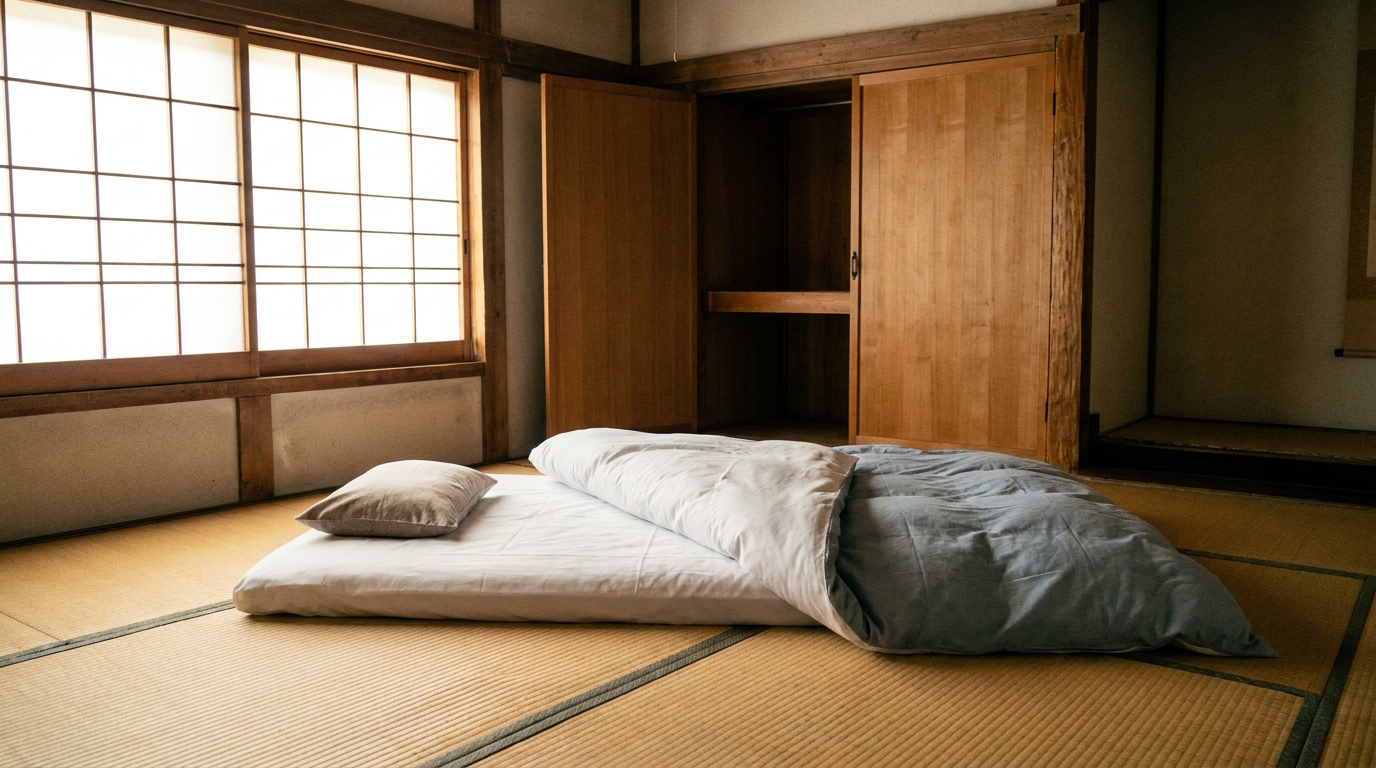
Elevate for Airflow and Insulation
Tatami mats form the ideal base for a futon. Made from rice straw and rush grass, they create a slight gap between the futon and floor. This allows air to circulate, preventing moisture transfer and improving temperature regulation. The result is cool comfort in summer and warm insulation in winter.
Protect Against Dust and Spills
The mat acts as a barrier, shielding the futon from floor dust, spills, and humidity. It also cushions the surface slightly, enhancing comfort without sacrificing support.
Enjoy a Grounded, Earthy Aesthetic
Tatami emits a natural, hay-like scent that fades over time. This earthy aroma, combined with the minimalist look, creates a serene, calming bedroom atmosphere. For those sensitive to smells, airing the mats for several hours before use reduces initial odor.
Maintain with Careful Vacuuming
Tatami mats need regular vacuuming to stay clean. Use a low-suction setting and avoid aggressive brushing to prevent thread loosening. With proper care, they last for years and age gracefully.
Minimalist Living and Cultural Connection
Embrace a Clutter-Free Lifestyle
Futons embody minimalist design. With no bulky frame or decorative headboard, they contribute to a clean, uncluttered room. This simplicity reduces visual stress and supports mindfulness, making the bedroom a true sanctuary.
Sleep Like You’re in a Ryokan
For travelers who’ve stayed in traditional Japanese inns, futons offer a familiar, authentic experience. Using one at home deepens cultural appreciation and brings a sense of calm found in Japanese living spaces.
Surprise and Delight Your Guests
Most Western guests are unfamiliar with floor sleeping. Rolling out a futon can spark curiosity and conversation, turning bedtime into a memorable experience. It’s a small way to share a different way of living.
Ideal for Specific Lifestyles
Perfect for Small-Space Dwellers
If you live in a studio, tiny home, or city apartment, a futon is a game-changer. It eliminates the need for a dedicated bedroom, turning one room into a living, working, and sleeping space. The ability to clear the floor daily enhances functionality and comfort.
Great for Yoga and Home Exercise
With the futon stored, you gain a full open floor, ideal for yoga, stretching, or workouts. No furniture to move and no corners to avoid. This convenience encourages consistent movement and a healthier routine.
Best for Health-Focused Sleepers
If you struggle with back pain, poor sleep, or allergies, a futon addresses root causes. The firm support, natural materials, and hygiene routine work together to improve overall well-being. It’s not just a bed; it’s a health investment.
Suited for Minimalists and Travelers
Minimalists love the simplicity and intentionality of futon use. Travelers appreciate the familiarity and cultural authenticity. Both groups value the mindfulness that comes from a daily ritual involving sunlight, air, and movement.
Real Maintenance Commitment
Accept the Daily 2–3 Minute Task
The benefits of a futon depend on consistency. Skipping the morning routine risks moisture buildup, pests, and odor. Just two to three minutes a day prevents these issues and maintains the bed’s freshness and longevity.
Store Properly to Preserve Condition
Ensure you have space to store the futon, whether under a bed, in a closet, or against a wall. If space is tight, hanging it on a door rack works well. Proper storage keeps it dry, clean, and ready for nightly use.
Address Pests Proactively
If mites or bugs appear, take these steps:
- Vacuum tatami mats regularly
- Apply natural pesticide sprays lightly
- Expose mats to freezing winter temperatures to kill pests
Prevention through daily airing is the best defense.
Long-Term Value and Cost

Save Money Over Time
While a high-quality futon may cost $300 to $600 upfront, it lasts 10 to 20 years with care. Compare that to a $1,000+ mattress that sags in 5 to 7 years. Over time, the futon is more cost-effective, especially when you factor in no need for a frame.
Avoid Frequent Replacements
Traditional mattresses lose support quickly. Futons, made from durable natural fibers, maintain their integrity. A four-year-old cotton futon, when properly aired and flipped, can look and feel like new.
Consider Import Costs Wisely
Importing from Japan may include customs fees and shipping. European buyers, for example, often find quality German-made tatami without extra charges. Research local suppliers to avoid unnecessary costs.
Smart Transition Tips
Start with a Thinner Futon
If you’re unsure, begin with a lighter, foldable model. This eases the adjustment and lets you test the lifestyle before committing to a full set.
Test Before You Buy
Visit a Japanese home goods store or ryokan to try a futon firsthand. Lying on one helps you assess comfort and firmness before purchasing.
Pair with Tatami for Best Results
Using a futon directly on hardwood or tile isn’t ideal. Tatami adds insulation, airflow, and comfort. The combination delivers the full range of benefits, from spinal support to moisture control.
Plan for the Adjustment Phase
Expect some discomfort in the first week. Use fewer pillows and stick with it. By week three, your body will adapt, and the benefits of better sleep, less pain, and more space will become clear.
Frequently Asked Questions About Futons
What Are the Main Health Benefits of Sleeping on a Futon?
The main health benefits include natural spinal alignment, reduced back and neck pain, and improved posture over time. Futons also promote back sleeping, which is widely considered the best position for spinal health. Many users report waking up pain-free after consistent use.
How Long Does It Take to Adjust to a Futon?
Most people need about three weeks to fully adjust to sleeping on a futon. The first few nights may feel uncomfortable, especially for those transitioning from soft mattresses. After this adjustment period, users typically fall asleep faster and experience deeper, more consistent sleep.
Are Futons Better for Small Spaces Than Traditional Beds?
Yes, futons are significantly more space-efficient than traditional beds. They fold and store away during the day, freeing up the entire floor for other activities. This makes them ideal for studio apartments, tiny homes, and multi-purpose rooms.
Do Futons Require Daily Maintenance?
Yes, futons require a simple 2 to 3 minute routine each morning. This includes airing, flipping, and either folding or hanging the futon. This daily habit prevents moisture buildup, reduces allergens, and extends the futon’s lifespan.
Can a Futon Help with Back Pain?
Many long-term users report significant relief from chronic back pain after switching to a futon. The firm, supportive surface keeps the spine in a neutral position and prevents the sagging that contributes to poor alignment. One documented case showed complete resolution of back pain after four years of consistent use.
What Materials Are Best for a Futon?
Natural materials like cotton and jute are best for futons. They breathe well, wick moisture, and don’t off-gas harmful chemicals. Synthetic materials, memory foam, and plastic should be avoided because they trap heat and degrade faster.
Key Takeaways for Embracing the Benefits of a Futon
A futon offers more than a place to sleep; it delivers a complete lifestyle upgrade. The benefits of a futon include better spinal alignment, deeper sleep, superior hygiene, and maximum space efficiency. By committing to a simple daily routine, you gain cleaner air, fewer allergens, and a minimalist home that supports both physical health and mental clarity.
For anyone living in a small space, struggling with back pain, or seeking a more intentional lifestyle, a futon provides real, lasting value. Start with a thinner model, pair it with tatami mats, and give your body three weeks to adapt. The result is better sleep, less pain, and a room that truly breathes.