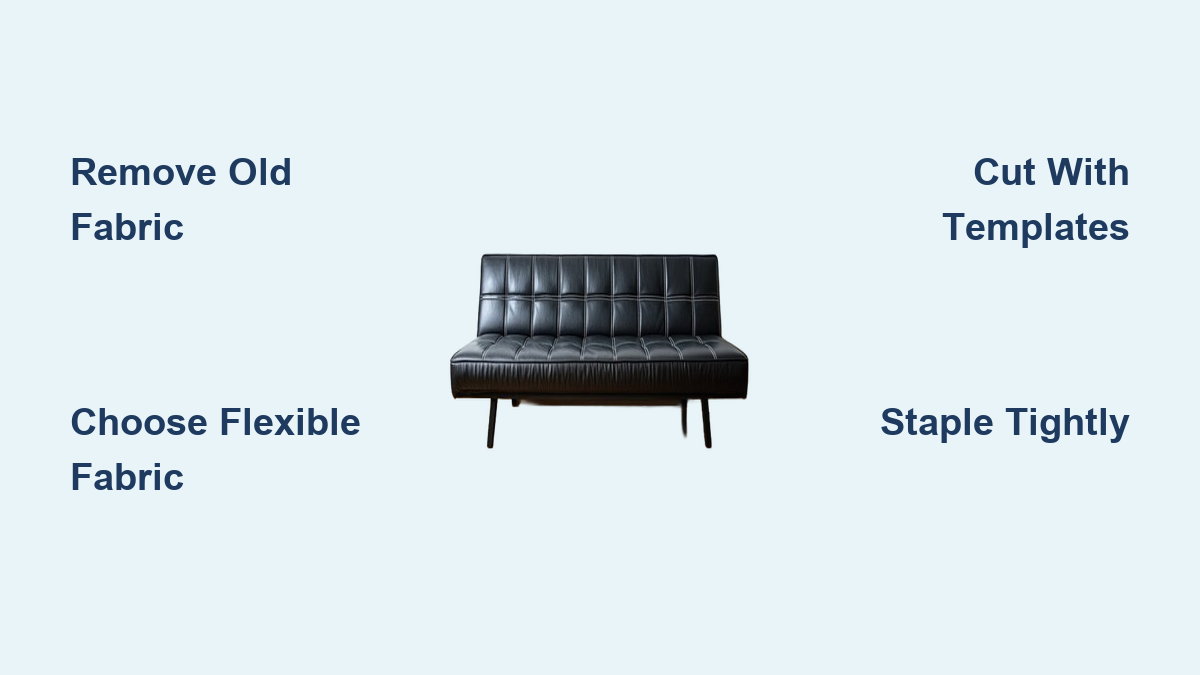
How to Reupholster a Futon Couch: Quick Steps
Your favorite futon couch likely serves as both a comfortable sofa and a guest bed, but worn fabric can ruin its appeal. Instead of buying new furniture, you can master how to reupholster a futon couch to save money and reduce waste. This DIY project restores your living space with custom style while extending the life of your current frame.
You will learn to strip old materials safely, select durable fabrics that bend without cracking, and staple new covers with professional tension. Most homeowners complete this transformation in a single weekend using basic tools like a staple gun and scissors. Follow this guide to achieve tight seams and a flawless finish on your next furniture revival.
Remove Old Upholstery Carefully to Protect the Frame
Stripping away old fabric requires patience to avoid damaging the wooden frame or foam padding underneath. Work in a spacious, well-lit area where you can lay out every piece as you remove it.
Document the Original Assembly with Photos
Take clear photos of your futon from every angle before pulling a single staple. Capture close-ups of how the fabric wraps around corners, meets at seams, and attaches to moving joints. These images serve as your primary reference guide when installing the new material.
Label each removed section with masking tape to identify its location later. Mark pieces like “left arm,” “seat top,” or “back flap” to prevent confusion during reassembly. Keeping the original layout organized ensures your new cover fits perfectly.
Extract Staples Without Splintering Wood
Start your removal at the bottom or least visible part of the frame to minimize potential damage. Use a flathead screwdriver or dedicated staple remover to gently pry staples out one by one. Work slowly to keep the wood surface smooth for the new fabric.
Remove sections in a logical order:
* Begin with outer skirts or side panels
* Proceed to the main seat and backrest cushions
* Finish with fabric near foldable joints
Collect all removed staples in a magnetic tray or small container. While some may be reusable, plan to purchase fresh staples for a secure and lasting hold.
Evaluate Foam Padding and Structural Integrity
Inspect the exposed foam once the fabric is completely removed. Look for flattened spots, tears, or signs of moisture damage that might need repair. Replace compromised foam with high-density cut-to-size options if necessary.
Wipe down the wooden frame with a dry cloth to remove dust and debris. Check all joints and screws for looseness, tightening them now to ensure your futon remains stable. A solid frame is essential for a long-lasting reupholstery job.
Choose Durable Flexible Fabric for Folding Mechanisms

Selecting the right material is critical because futons endure constant folding and unfolding stress. Standard upholstery fabrics often crack or tear at crease points, so you must choose options designed for flexibility.
Select Wrinkle Resistant and Stretch Friendly Materials
Opt for fabrics that offer both durability and the ability to stretch slightly without losing shape. Microfiber is an excellent choice as it resists stains and feels soft against the skin. Crypton fabric provides superior protection against spills and odors for high-traffic areas.
Consider these additional fabric types:
* Denim or canvas blends for strength and breathability
* Stretch knit upholstery fabric to reduce stress at fold points
* Synthetic blends that resist fading and pilling
Avoid stiff materials like heavy brocade or thick leather. These fabrics tend to crack at creases and make the folding mechanism difficult to operate smoothly.
Purchase Extra Yardage for Pattern Matching
Buy 10 to 20 percent more fabric than your initial measurements suggest. This buffer accounts for pattern matching across different panels and potential cutting errors. It also allows you to re-drape complex corners if the first attempt fails.
Lay your old fabric pieces flat on a large surface to trace their shapes onto craft paper. Use these paper templates to cut your new fabric efficiently and minimize waste during the process.
Cut New Fabric Using Precise Paper Templates
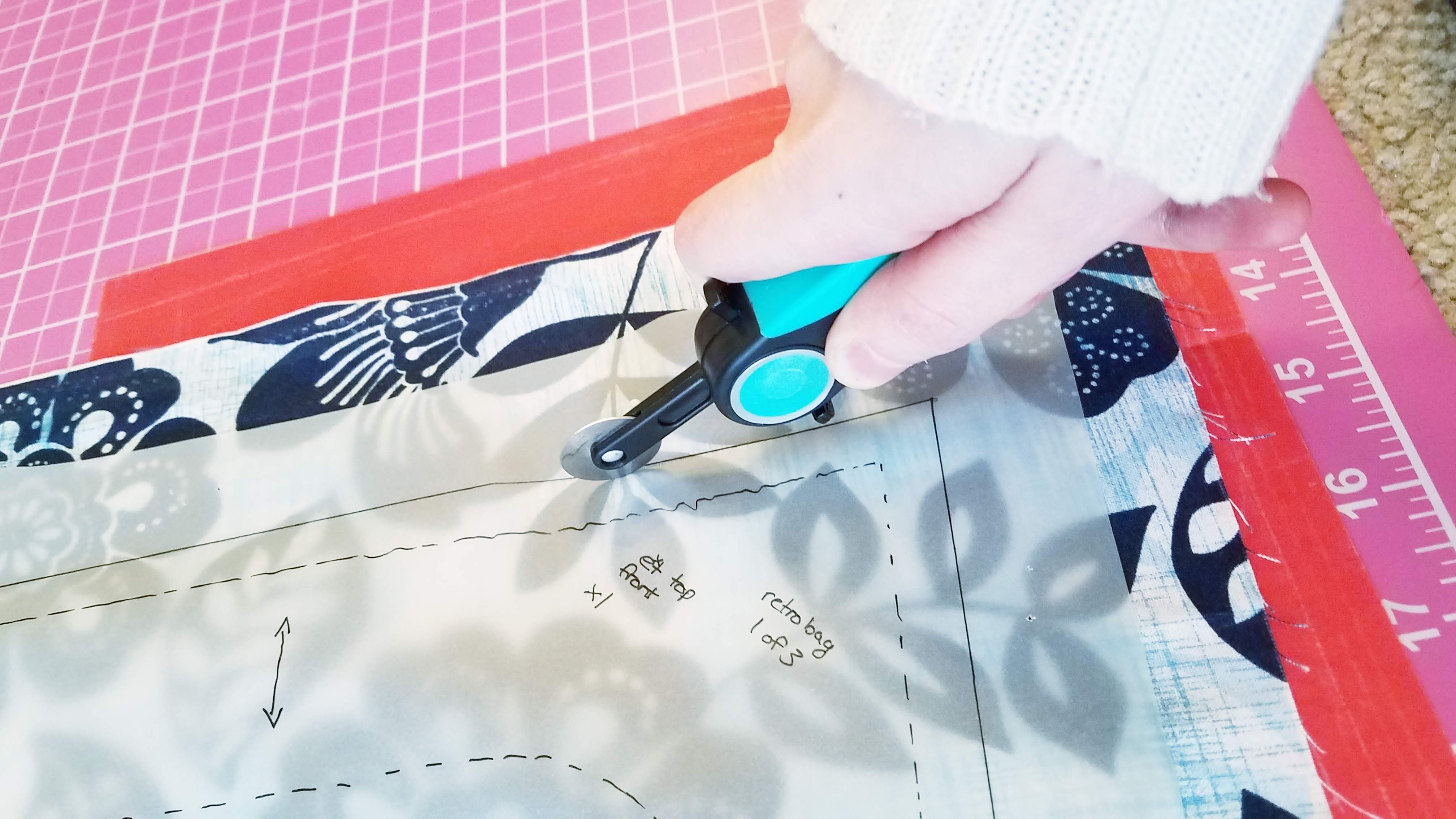
Accuracy during the cutting phase determines the final look of your project. Small misalignments can cause unsightly bunching or gaps once the fabric is attached to the frame.
Transfer Old Panels to Heavy Pattern Paper
Place each removed fabric section onto kraft paper or cardboard and trace the outline carefully. Mark seam allowances, fold lines, and any curved edges clearly on your template. Indicate the grain direction on each piece to ensure proper fabric stretch.
Label every template to match its specific location on the futon. This step prevents mix-ups when you begin attaching the new material to the frame.
Cut Fabric with Sharp Scissors or Rotary Tools
Use sharp fabric scissors or a rotary cutter to achieve clean and precise edges. Cut along your traced lines on the wrong side of the fabric to prevent fraying on the visible surface. Dull tools can snag the material and ruin the texture.
Align motifs across symmetrical panels if you are using patterned fabric. Ensure designs on the seat and backrest match visually when the futon is assembled. Double-check all cuts against your templates before moving to the stapling phase.
Staple Fabric Securely to the Wooden Frame
Attaching the new upholstery requires a methodical approach to maintain even tension. Rushing this step can lead to wrinkles or loose fabric that ruins the professional appearance.
Begin Stapling from Center Points
Start stapling at the center of each major panel rather than at the corners. Work outward toward the edges in a star pattern to keep the fabric straight. This technique prevents wrinkles and ensures even distribution of tension.
Use an upholstery staple gun loaded with 1/4-inch to 3/8-inch staples. Place staples every 1 to 2 inches along straight edges and every inch around curves for a secure hold.
Pull Taut Without Overstretching the Material
Use your free hand or a fabric puller tool to gently stretch the material as you staple. The fabric should lie flat without sagging, but avoid excessive tension that could distort seams. Overstretching can cause the fabric to tear or pull away from staples over time.
Fold fabric neatly at corners similar to wrapping a gift:
* Create small pleats for sharp angles
* Trim excess bulk underneath to prevent lumps
* Staple securely under or behind the frame for a hidden finish
Reattach Cushion Covers and Moving Flaps
Many futons feature removable or hinged cushion covers that allow the frame to fold into a bed. These areas require special attention to ensure they function correctly after reupholstering.
Replicate Original Seam Paths Exactly
If your futon has sewn seams along fold lines, replicate them using a heavy-duty needle and thread. Use double-stitched seams for added strength in high-stress areas. A sewing machine works best for long, straight lines on thick fabric.
Ensure the fabric overlaps enough to cover the hinge completely when folded. Test the motion frequently during this process to confirm smooth operation without binding.
Secure Moving Parts Without Restricting Motion
Avoid stapling fabric directly over folding joints where wood meets wood. Instead, leave a small gap or use flexible bias tape to bridge the connection. Allow slight slack in the fabric between sections to accommodate movement.
Use fabric glue or zig-zag stitching for stretch zones to maintain flexibility. This approach preserves the full range of motion while keeping a clean appearance in both couch and bed modes.
Test Functionality Before Finalizing Your Work
Do not assume the job is complete after placing the last staple. Thorough testing helps you catch issues early before they become permanent problems.
Open and Close the Futon Multiple Times
Fold the futon from couch to bed position at least five times. Watch closely for fabric snagging on staples or wood edges. Check for gaps or excessive tightness at joints that could cause tearing later.
Adjust any problem areas immediately by re-stapling or trimming excess material. Ensure the foam stays in place and does not shift or bunch during conversion.
Check for Loose Edges or Air Bubbles
Run your hand over all surfaces to feel for bubbles or loose spots. If you hear flapping or feel unevenness, add more staples to secure the fabric. Reinforce high-stress zones like seat edges and backrest bases for durability.
Trim any stray threads and vacuum lint from the work area. Your futon is now ready for regular use with a fresh new look.
Maintain Your Reupholstered Futon Properly
Proper care extends the life of your newly covered futon and keeps it looking fresh. Simple maintenance habits prevent premature wear and protect your hard work.
Clean Spills Immediately to Prevent Stains
Blot liquids with a dry cloth immediately rather than rubbing them in. Use a mild detergent mixed with water and a soft brush for stubborn stains. Always test cleaning solutions on a hidden area first to ensure colorfastness.
Avoid soaking the fabric as excess moisture can damage the foam inside. Quick action prevents liquids from penetrating deep into the padding.
Rotate and Fluff Cushions Regularly
Flip or rotate seat and back cushions monthly to ensure even wear. This practice prolongs the life of both the fabric and the foam padding inside. Air out the futon bed occasionally by leaving it unfolded for a few hours.
Frequently Asked Questions About Reupholstering Futons
Can I reupholster a futon without sewing skills?
Yes, you can reupholster many futons using only a staple gun and scissors. Simple designs often require wrapping fabric around the frame and securing it tightly without any sewing. Complex models with fitted covers may need basic stitching for seams.
How much fabric do I need to reupholster a futon couch?
Most standard futons require between 8 and 12 yards of fabric depending on size. Always buy an extra 10 to 20 percent to account for pattern matching and mistakes. Measuring your specific model before buying ensures you have enough material.
What type of fabric is best for a folding futon?
Stretchy and durable fabrics like microfiber or knit upholstery blends work best. These materials bend easily at fold points without cracking or tearing over time. Avoid stiff fabrics like heavy leather or brocade that cannot handle frequent folding.
How long does it take to reupholster a futon?
Most DIY projects take between 4 and 8 hours to complete depending on experience. Beginners should set aside a full weekend to allow time for careful removal and installation. Complex designs with many panels may take longer to finish properly.
Do I need to replace the foam when reupholstering?
You only need to replace the foam if it is flattened, torn, or smelly. Inspect the padding carefully after removing the old fabric to determine if replacement is necessary. High-density foam is recommended if you decide to upgrade the comfort level.
Key Takeaways for Reupholstering Your Futon Couch
Reupholstering a futon couch is a rewarding project that saves money and reduces waste. By choosing flexible fabrics, using precise templates, and stapling methodically, you can achieve professional results at home. Regular maintenance ensures your refreshed furniture lasts for years.
Start your project today by gathering tools and selecting the perfect fabric for your lifestyle. With patience and attention to detail, your futon will look and function like new again.