
How to Measure a Futon
You’re ready to buy a futon or replace an old one, but guessing the dimensions almost always leads to frustration. Whether you’re furnishing a small apartment, dorm room, or studio, knowing how to measure a futon correctly saves you from costly returns and sleepless nights on an ill-fitting mattress.
This guide walks you through every step of measuring a futon, from frame dimensions to mattress thickness and open versus closed configurations. You’ll also learn how to check doorways, choose the right bedding, and avoid common measuring mistakes. No guesswork, just clear steps to get it right the first time.
Measure the Futon Frame in Both Positions
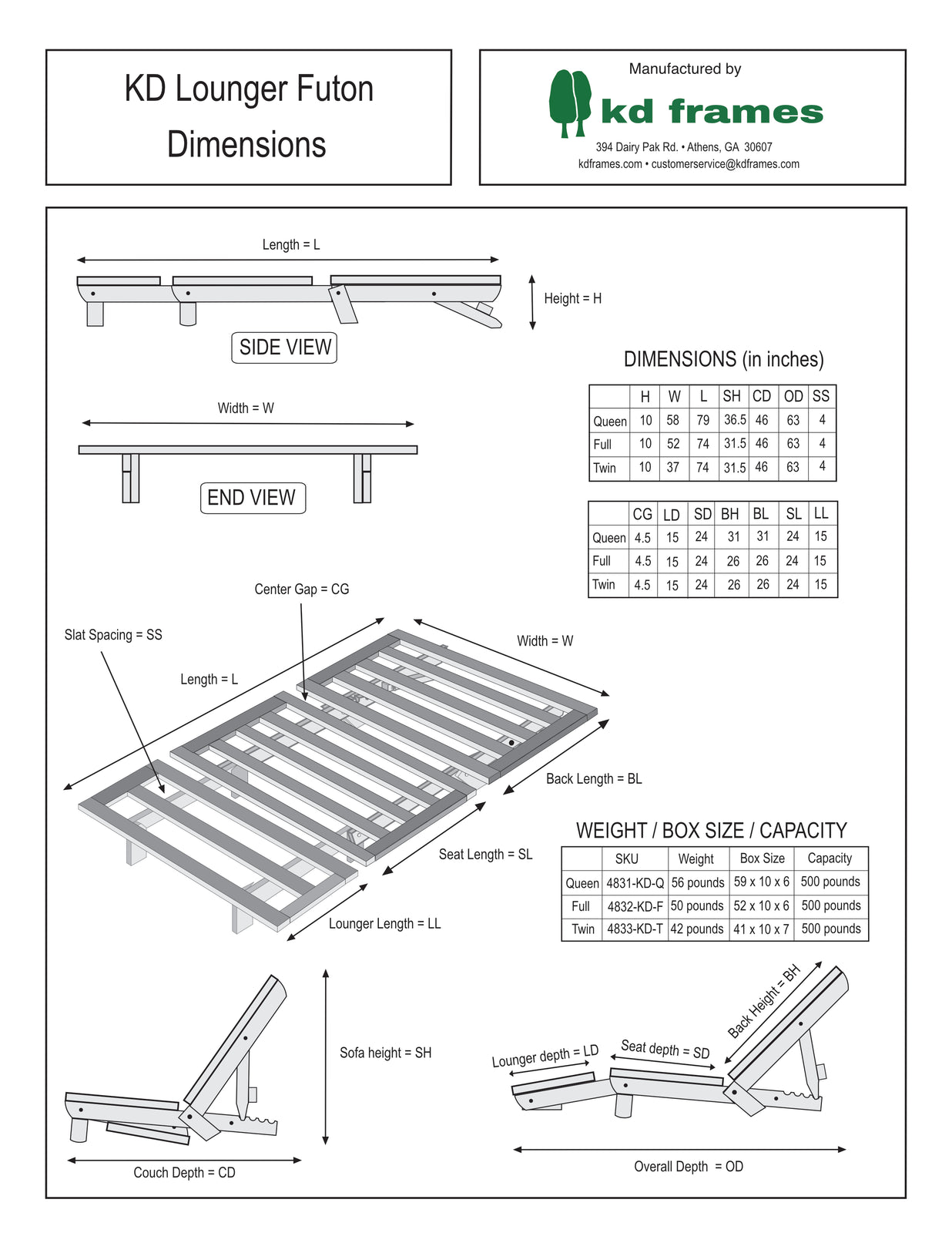
Before you measure cushions or bedding, start with the bare frame. The frame sets the maximum footprint and affects how the futon moves through your space.
Closed Position (Sofa Mode)
When the futon functions as a couch, measure its full outer outline. This tells you how much floor space it occupies daily.
- Length: Measure from the back edge to the front of the seat.
- Width: Measure across the front from armrest to armrest, or outer edge to outer edge if armless.
- Height: Measure from the floor to the tallest point, usually the backrest.
Allow at least 2 to 3 inches of walking space around the futon. This keeps the area comfortable and prevents the frame from scraping walls.
Open Position (Bed Mode)
When you recline the futon into a bed, it extends outward. Many people underestimate this length and end up blocking doors or vents.
- Length: Measure from the head of the frame to the foot when fully flat.
- Width: Usually matches closed width unless the frame expands sideways.
- Clearance check: Walk the extended length and confirm nothing blocks it.
Some L-shaped or chaise futons expand in unique ways. Measure each section separately if your model has multiple parts.
Measure the Mattress or Cushions Carefully
The mattress determines your bedding size and sleeping comfort. Never assume a futon mattress matches standard bed dimensions, because most do not.
Length, Width, and Thickness
Use a flexible tape measure across the sleeping surface for accuracy.
- Length: Head to foot along the longest edge.
- Width: Side to side across the widest point.
- Thickness: Base to top surface, which matters most for fitted sheets.
A common mistake is assuming a “full-size” futon is exactly 54 inches by 75 inches. Many are closer to 52 inches by 74 inches to fit snugly inside the frame.
Check for Tapering or Irregular Shapes
Some futon mattresses taper at the ends or have curved edges that affect fit.
- Measure at the top, middle, and bottom of the mattress.
- Use the smallest width and length when shopping for covers.
Sketch a quick outline and label each measurement. This simple step prevents confusion when comparing numbers later.
Match Your Measurements to Standard Bed Sizes
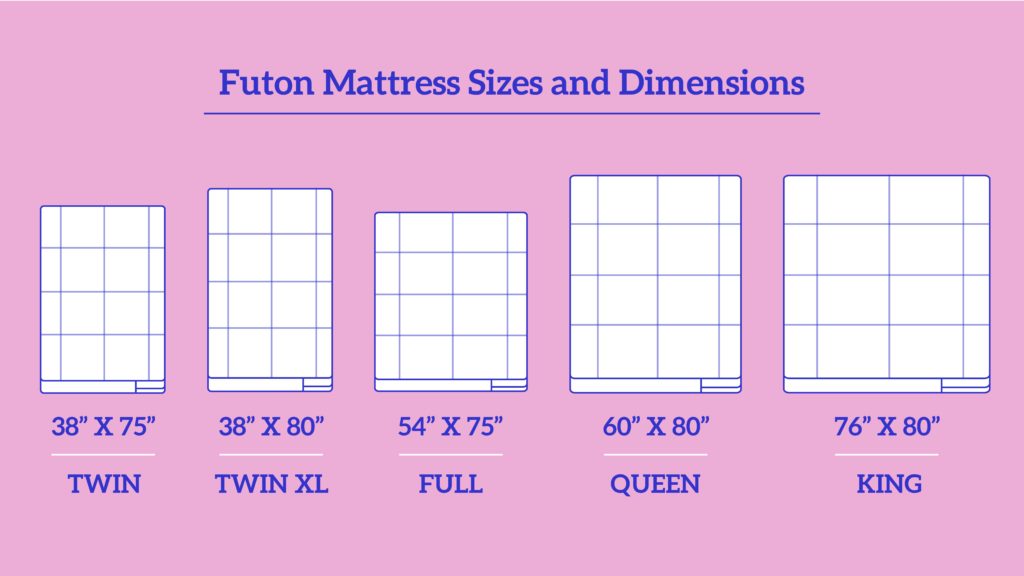
Once you have the numbers, compare them to standard bedding categories. This helps you shop faster and find sheets that actually fit.
Standard Size Benchmarks
Use these common dimensions as reference points:
- Twin: 38 inches by 75 inches
- Twin XL: 38 inches by 80 inches
- Full: 54 inches by 75 inches
- Queen: 60 inches by 80 inches
If your futon mattress falls within 1 to 2 inches of any standard size, regular bedding may work. If it falls outside that range, look for custom or adjustable options.
Identify Non-Standard Sizes
Many futons, especially older or imported models, do not match standard categories at all.
- A 50 inch by 72 inch mattress is common for older full-size futons.
- Search for “semi-custom” or “deep-pocket” fitted sheets with elastic edging.
Stretchy sheets may fit but often wear out faster. Order a sample swatch first when possible to test the fabric.
Measure for a Mattress Replacement

Replacing a worn futon mattress requires precise measurements. A small error here means discomfort and return headaches.
Remove the Mattress First
Take the mattress off the frame so you can measure freely and inspect its condition.
- Look for sagging, lumps, or uneven edges that reduce usable space.
- Measure at the top, middle, and bottom, then note the smallest dimension.
Most replacement futon mattresses range from 6 to 10 inches thick. Thicker does not always mean better, so confirm your frame supports the height.
Confirm Frame Compatibility
Not every mattress fits every frame. Check these details before purchasing.
- Width clearance: The mattress should sit snugly without hanging over the edges.
- Hinge alignment: The mattress must not block the folding mechanism.
- Weight limits: High-density foam can exceed what some frames support.
Memory foam adds comfort but may compress slowly when folded. Hybrid mattresses often convert more smoothly for daily use.
Measure for Covers and Sheets
Standard bed sheets rarely fit futons because of thickness and shape. Measure carefully to find bedding that actually works.
Calculate Total Depth for Fitted Sheets
Add the mattress thickness to the fabric drop on both sides.
- Total depth = Mattress thickness plus (2 times fabric drop)
- Example: An 8 inch mattress with a 10 inch drop needs a 28 inch deep sheet
Most retail sheets max out around 18 inches deep. For thicker futons, search for “deep-pocket” or “futon-specific” options online.
Measure for Mattress Covers or Protectors
Protectors should fit tightly without bunching or sliding.
- Measure length, width, and height of the mattress.
- Wrap a flexible tape measure around the mattress like a belt to get total girth.
Waterproof protectors add slight thickness. Measure after installation if you plan to layer multiple covers.
Measure Doorways and Stairways Before Delivery
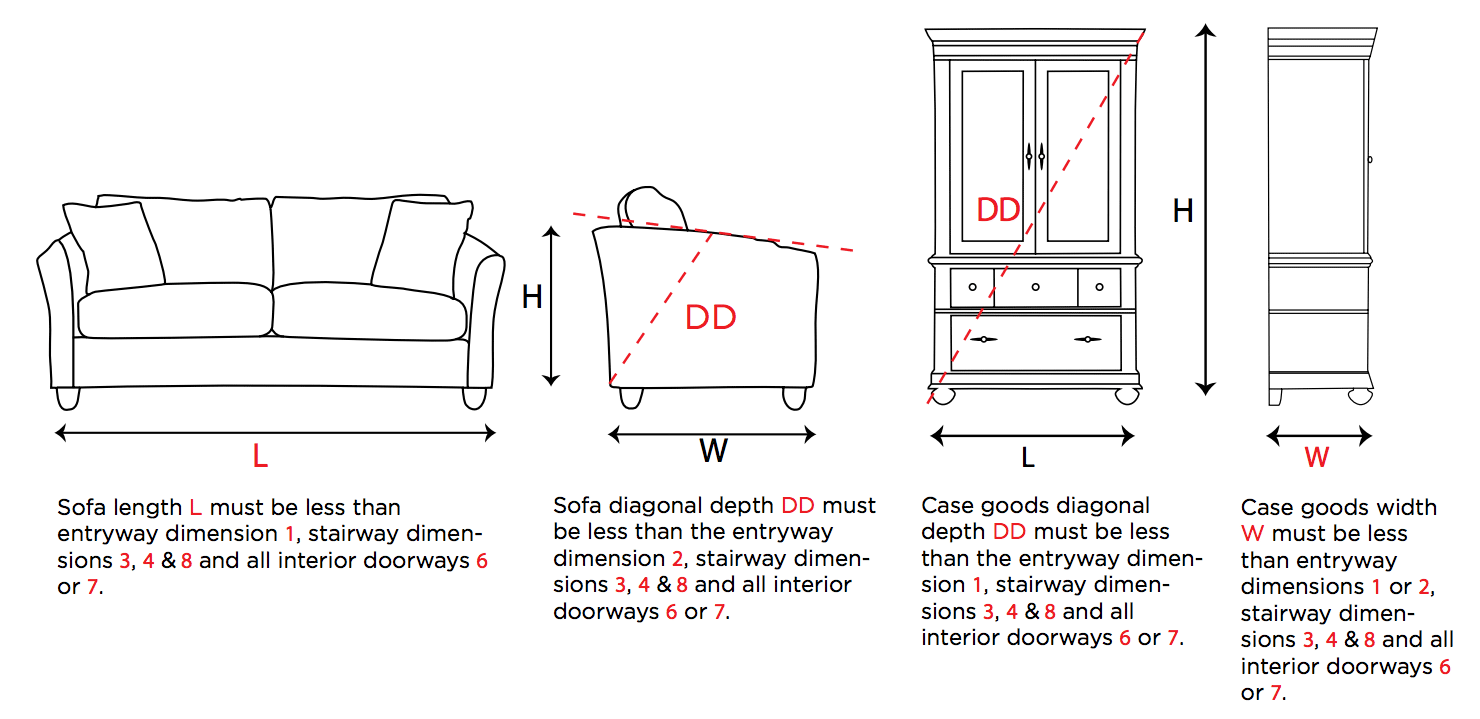
Even if the futon fits the room, it still has to get inside the building. Measure every entry point in advance.
Entryway Clearance Check
Find the narrowest point along your delivery path and measure it carefully.
- Doorways: Width and height, including trim and thresholds.
- Hallways and corners: Account for turns by measuring diagonal clearance.
- Stairs and elevators: Note width, headroom, and landing space.
A simple rule of thumb: if the futon’s diagonal measurement is smaller than the doorway’s diagonal, you can usually tilt it through.
Consider Partial Disassembly
Some futon frames can be partially taken apart to fit tight spaces.
- Remove legs, arms, or backrests to reduce the overall size.
- Store screws and hardware in a labeled bag for easy reassembly.
Only disassemble if the manufacturer’s instructions allow it. Forcing parts apart can affect stability and void your warranty.
Common Measurement Mistakes to Avoid
Small errors lead to big problems. Steer clear of these frequent pitfalls when learning how to measure a futon.
Using a Ruler Instead of a Tape Measure
Rulers are too short for furniture and leave you guessing on longer spans.
- Use a 25 foot retractable tape measure for full-length accuracy.
- Ask a helper to hold the other end for straight, reliable measurements.
Measuring Only the Mattress, Not the Frame
The frame adds bulk, especially in sofa mode. Always measure the full unit in both positions, including arms, backrests, and base extensions.
Forgetting Clearance for Daily Use
A futon needs room to function comfortably in both modes.
- Allow 12 to 18 inches in front for legroom when seated.
- Ensure 30 inches behind for reclining if the frame folds flat against a wall.
Dry-fit the footprint with painter’s tape on the floor. Visualizing the space prevents surprises after delivery.
Frequently Asked Questions About Measuring a Futon
What Tools Do I Need to Measure a Futon?
You only need a flexible tape measure, a notepad, and a helper for long spans. A 25 foot retractable tape measure works best for full-length accuracy.
How Do I Measure a Futon Mattress for Replacement Sheets?
Measure length, width, and thickness at the widest points. Add the fabric drop on both sides to determine total depth for fitted sheets.
Are Futon Mattress Sizes Standard?
No. Most futon mattresses run slightly smaller than standard bed sizes. Always measure your specific mattress instead of assuming a category.
How Do I Know If a Futon Will Fit Through My Doorway?
Measure the doorway’s width, height, and diagonal clearance. If the futon’s diagonal is smaller than the doorway’s diagonal, it should tilt through.
Can I Use Regular Bed Sheets on a Futon?
Sometimes. If your futon mattress falls within 1 to 2 inches of a standard size, regular sheets may work. Otherwise, choose deep-pocket or futon-specific options.
Should I Measure a Futon With or Without the Mattress?
Measure both. The frame determines room placement, while the mattress determines bedding fit. Each requires separate measurements for accurate results.
Key Takeaways for Measuring a Futon With Confidence
Learning how to measure a futon properly saves time, money, and frustration on every purchase. Always measure the frame and mattress separately, and check both open and closed positions before buying.
Account for mattress thickness when shopping for sheets, and measure every doorway along your delivery path. With accurate numbers in hand, you can choose bedding, replacements, and new frames that fit perfectly the first time.