How to Fluff Up a Futon Mattress
A flat, lifeless futon mattress can turn a comfortable living space into an uncomfortable one. Over time, regular use compresses inner fibers, leaving your bedding sagging and lumpy. If you are wondering how to fluff up a futon mattress effectively, you are not alone. Many owners face this issue as weight pressure packs down the filling.
The good news is that specific techniques can restore softness and extend the life of your mattress. This guide walks you through proven methods to revive your futon, from daily maintenance to deep cleaning. You will learn to identify compression issues, use proper flipping methods, and know when replacement is necessary.
Flip and Rotate Your Mattress Regularly
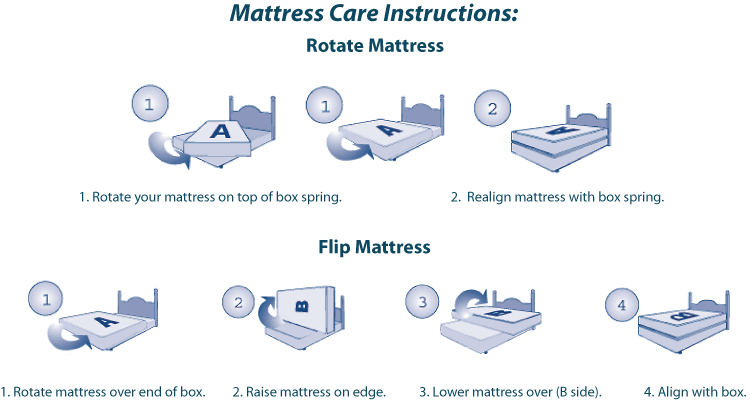
Consistent movement of your mattress is the most effective way to prevent permanent compression. Most futons are double-sided, meaning both surfaces are designed for active use. Moving the mattress redistributes pressure points and allows packed fibers to rebound.
Flip Weekly for Even Wear
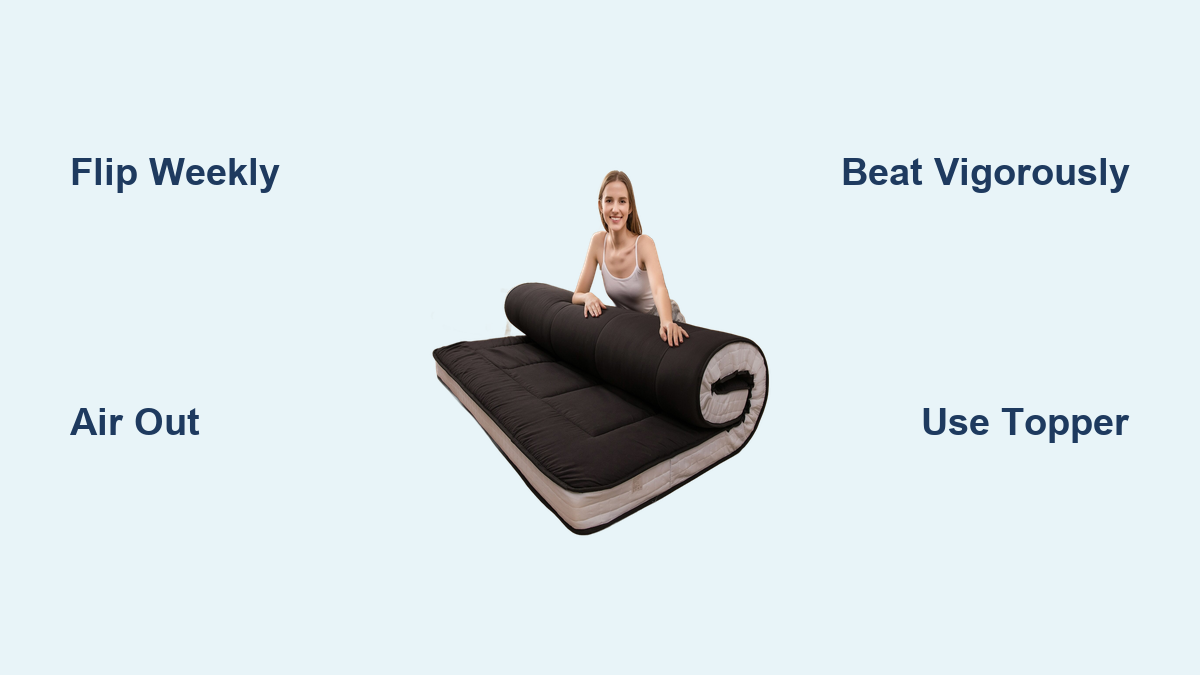
You should flip your futon mattress every single week to maintain its shape. Simply lift the entire unit and turn it over so the underside becomes the top surface. This routine ensures that one side does not bear the brunt of daily weight. Consistent flipping helps maintain uniform thickness across the whole surface.
Rotate to Prevent Spot Sagging
In addition to flipping, rotate the futon 180 degrees once a month. This prevents specific areas, such as where you usually sit, from becoming permanently indented. Rotation is crucial if one end of the bed bears more weight than the other. Combining rotation with flipping yields the best structural results.
Pro Tip: Set a recurring phone reminder to flip and rotate your mattress. A small routine goes a long way in preserving longevity.
Air It Out Completely to Restore Loft
Futon mattresses trap moisture and heat from body contact, which breaks down filling over time. To fluff it up, you must allow air to circulate through the internal layers. This process helps dried fibers regain their original loft and volume.
Unfold and Leave Open for Hours
Fully unfold the futon and leave it in the open position for at least four to six hours. Avoid folding it up immediately after use, as this traps humidity inside. Giving the mattress time to breathe is essential for fiber recovery.
Place Near a Window or Fan
Position the futon near an open window or use a fan to increase airflow speed. Fresh air helps dry out trapped humidity and reduces musty odors significantly. Brief sunlight exposure of one to two hours can disinfect fabric and rejuvenate fill. Avoid prolonged direct sun, as UV rays may fade or weaken the fabric structure.
Warning: Never leave a futon in direct sunlight all day. Extended exposure damages upholstery and inner materials.
Beat and Shake the Mattress Vigorously
A quick but effective method to restore volume is physically beating the futon. This action breaks up clumped filling and relofts compressed fibers inside the casing. You should perform this task outdoors to avoid spreading dust throughout your home.
Lift and Whack for Instant Fluff
Stand the mattress upright or hang it over a sturdy railing. Use your hands or a soft mallet to gently whack both sides of the unit. This impact separates stuck fibers and creates immediate space within the mattress. You will notice the mattress regaining thickness after this process.
Shake to Realign Inner Fill
After beating, shake the mattress vigorously from side to side and end to end. This helps redistribute internal stuffing, whether cotton, foam, or fiberfill, back into even layers. Strong shakes ensure the fill settles uniformly rather than staying in clumps.
Common Mistake: Do not use excessive force during this process. Too much beating can damage stitching or tear seams on older models.
Use a Mattress Brush or Vacuum
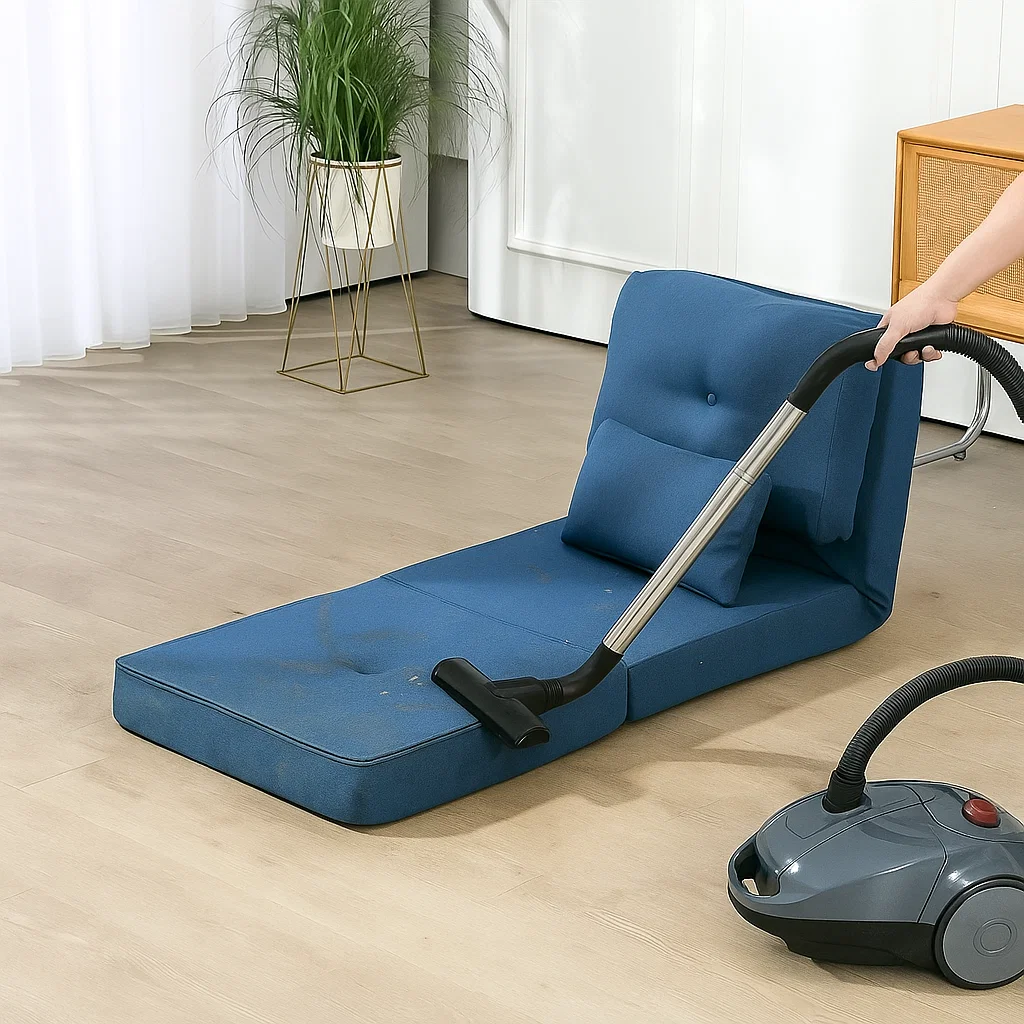
Cleaning the surface is vital for removing debris that weighs down the fabric. A clean surface allows the material to bounce back more effectively. This step also improves hygiene by removing allergens.
Gently Brush the Surface
Use a soft-bristle upholstery brush to clean the surface and lift flattened fabric. Work in circular motions, focusing on high-use areas like the center and seating zones. Brushing stimulates the outer layer to bounce back while removing surface dust.
Vacuum to Remove Deep Debris
Vacuum the entire surface with an upholstery attachment after brushing. Suction out dirt, pet hair, and allergens that restrict airflow through the fabric. Pay extra attention to seams and crevices where debris accumulates heavily.
Expert Note: Vacuum both sides if accessible. Some futons have removable covers that you should clean separately for best results.
Add a Topper for Extra Loft

If your futon remains flat despite fluffing efforts, consider adding a topper. This solution provides instant thickness and softness without replacing the entire unit. It is an excellent workaround for mild compression issues.
Choose a Compatible Mattress Topper
Select a foam or feather topper that is two to three inches thick. Memory foam adds support, while down or fiberfill toppers enhance plushness. Ensure the topper fits your futon dimensions perfectly so it does not slide during use.
Secure to Prevent Shifting
Use a fitted sheet or non-slip pad to keep the topper in place securely. Shifting layers can create uneven surfaces and reduce overall comfort significantly. A breathable topper also improves airflow, helping the futon stay fresh between cleanings.
Time-Saving Shortcut: Use a washable topper for easy maintenance and odor control.
Avoid Common Flattening Causes
Prevention is key to maintaining a fluffy futon over the long term. Certain habits accelerate compression and reduce the lifespan of the filling. Changing how you use the bed can make a massive difference.
Limit Excessive Sitting
Futons are designed for occasional sitting, not daily couch use. Constant pressure from sitting compresses edges and the center faster than sleeping does. Encourage guests to shift positions or place cushions on top to distribute weight evenly.
Don’t Fold While Warm or Damp
Always let the futon cool and dry completely before folding it up. Folding while warm traps body heat and moisture, which breaks down filling over time. Make it a habit to leave it open for at least 30 minutes after use.
Pro Tip: If you live in a damp climate, use a moisture-absorbing pack near the storage area.
Evaluate When to Replace Your Futon

Sometimes fluffing techniques cannot restore a mattress that is too old. Recognizing the signs of irreversible damage saves you from discomfort. Most futon mattresses last five to seven years with regular use.
Check for Permanent Sagging
Look for deep indentations or lumps that will not flatten out. If fluffing, beating, and airing do not restore shape, the unit may be beyond repair. A springy but uncomfortable feel often indicates core failure.
Smell and Allergy Test
A persistent musty odor or increased allergy symptoms may indicate mold inside the fill. These issues cannot be fully removed by fluffing or surface cleaning. If cleaning does not help, replacement is safer and more hygienic for your home.
Final Note: Invest in a higher-density futon if you use it daily. Denser foam or cotton cores resist compression longer than standard fills.
Maintain Long-Term Freshness
Creating a simple care routine ensures your futon stays supportive for years. Consistency is the most important factor in preventing deep compression. A few minutes of work each week pays off significantly.
Set a Weekly Care Routine
Create a simple ten-minute maintenance habit to follow every week.
* Unfold and air out for 10 to 30 minutes
* Flip or rotate the mattress
* Brush and vacuum the surface
* Shake and inspect for damage
This routine keeps your futon in top condition effectively.
Use a Protective Cover
A waterproof, breathable mattress protector shields against spills, sweat, and dust. It is easier to wash than the entire futon and adds a thin layer of cushioning. Look for stretchable, hypoallergenic options that fit snugly.
Expert Tip: Wash the cover every two to four weeks to maintain hygiene.
Frequently Asked Questions About Fluffing Futons
How often should I flip my futon mattress?
You should flip your futon mattress once a week to ensure even wear. Rotating it 180 degrees once a month also helps prevent permanent sagging in specific spots.
Can I put a futon mattress in the dryer?
No, you should never put a full futon mattress in a dryer. The heat can damage the filling and fabric, and most machines are not large enough. Air drying and beating are the safe methods to use.
Why does my futon smell musty after fluffing?
A musty smell usually indicates trapped moisture or mold growth inside the filling. Air the mattress out thoroughly in a dry, ventilated area. If the smell persists, the internal fill may be compromised.
Does beating a futon really help restore loft?
Yes, beating the mattress breaks up clumped filling and allows fibers to expand. This physical agitation is one of the most effective ways to restore volume quickly.
When is it time to buy a new futon mattress?
It is time to replace your futon if deep sagging, lumps, or odors persist after cleaning. Most units last five to seven years before losing their structural integrity.
Key Takeaways for Learning How to Fluff Up a Futon Mattress
Restoring your bedding requires a mix of physical agitation, air circulation, and consistent care. By flipping weekly, beating out clumps, and keeping the unit dry, you can significantly extend its life. These simple steps answer how to fluff up a futon mattress without expensive tools.
Start your maintenance routine today by airing out your mattress and giving it a good shake. If these steps do not improve comfort, consider adding a topper or replacing the unit. With proper care, your futon can remain a cozy and supportive part of your home.