

How to Sleep on a Futon
Tossing and turning on a too-soft mattress can leave you groggy, sore, and frustrated by morning. If you’ve been searching for a simpler, healthier way to rest, learning how to sleep on a futon might be the answer. This centuries-old Japanese tradition is gaining global attention for its ability to improve posture, save space, and promote deeper sleep.
In this guide, you’ll discover how to choose the right futon, set it up properly, build a daily care routine, and adapt your sleep position for maximum comfort. Whether you’re a minimalist, a chronic back-pain sufferer, or simply curious, these practical steps will help you transition with confidence.
Choose the Right Futon for Lasting Comfort

Opt for 100% Natural Cotton Construction
A natural cotton futon is the gold standard for breathability, durability, and chemical-free sleep. Cotton regulates temperature far better than foam or polyester, keeping you cool in summer and warm in winter. Unlike mass-produced Western mattresses, authentic cotton futons compress evenly and regain their shape with daily airing. Steer clear of synthetic blends, as they trap heat, break down faster, and often contain chemical flame retardants.
Select Medium-Firm Thickness for Support
Medium-firm thickness strikes the perfect balance between comfort and orthopedic support. A firm surface promotes spinal alignment and discourages sinking, which reduces pressure points throughout the night. Back sleepers thrive on this firmness, while side sleepers may need minor adjustments to feel at ease. If you’re transitioning from a soft mattress, start with a slightly softer cotton futon and gradually move to firmer models as your body adapts.
Size Up for Greater Freedom of Movement
A double-sized futon offers more room to shift positions without rolling off the edge. Even in compact rooms, a larger futon enhances comfort and reduces the feeling of confinement. Solo sleepers benefit from full or queen sizes for flexibility, while couples often prefer two single futons placed side by side for independent comfort and motion isolation.
Plan for 5 to 8 Years of Use
A high-quality cotton futon typically lasts 5 to 8 years with proper care. Unlike traditional mattresses that sag within a few years, well-maintained futons retain their shape and supportive bounce. Family-run Japanese workshops often produce longer-lasting options than factory-made alternatives. Replace your futon when it shows permanent compression, lumps, or reduced resilience, even with consistent airing.
Buy Authentic Materials from Trusted Sources
Purchase from reputable retailers or Japanese workshops to guarantee authenticity. Imported futons may involve customs fees, but the investment pays off in longevity and sleep quality. Avoid cheap synthetic futons sold online, as they lack breathability, wear out quickly, and may contain harmful chemicals. Whenever possible, buy locally or from specialty stores that prioritize natural materials.
Lay Your Futon on Tatami Mats
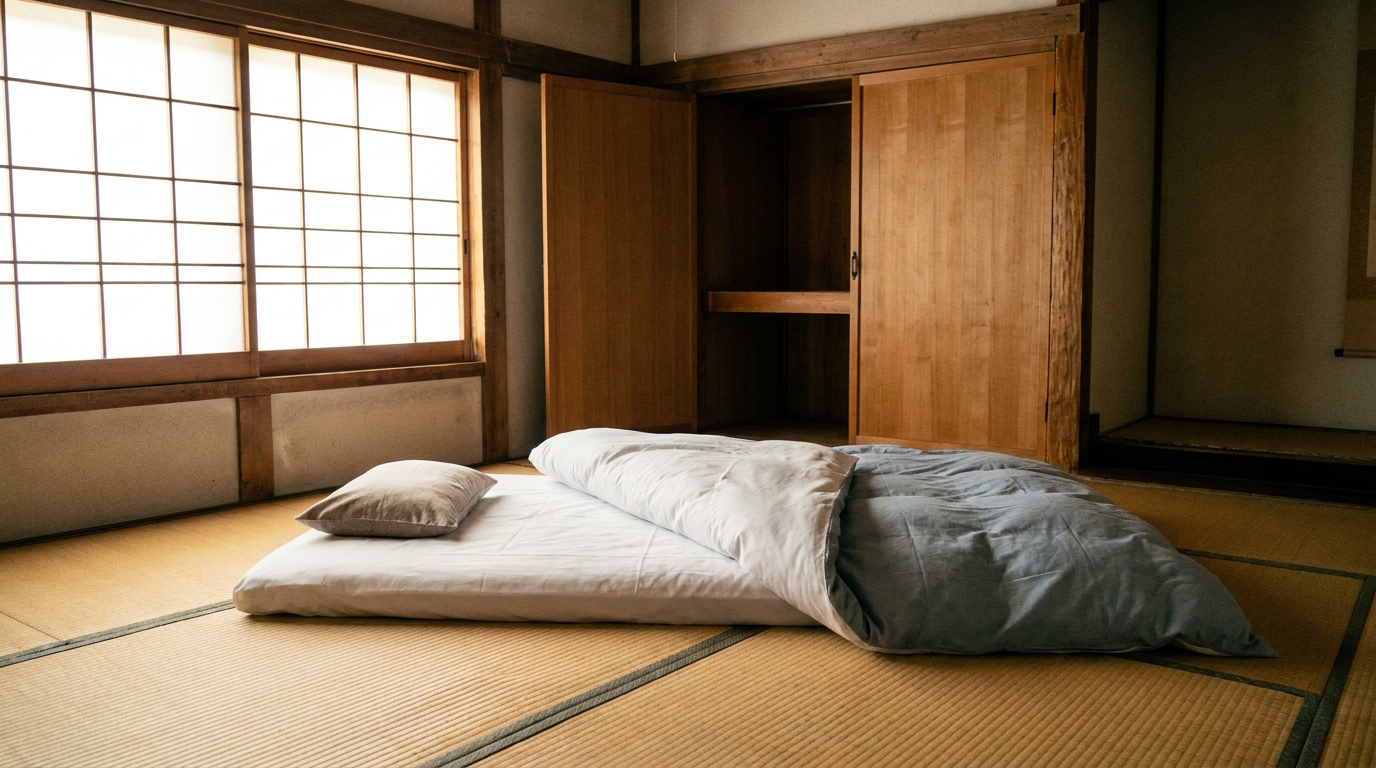
Use Tatami for Airflow and Moisture Control
Never place a futon directly on bare flooring. Instead, use tatami mats as a foundation. These traditional straw mats wick moisture, allow airflow, and provide subtle cushioning. They also protect wooden or tatami flooring from friction damage. The natural weave prevents mold and mildew by letting the futon breathe from underneath.
Compare Japanese and German Tatami Options
Japanese tatami mats are lighter and carry a distinctive earthy scent when new, reminiscent of fresh hay. This aroma fades within a few weeks. German-made tatami, while not traditional, are heavier, more durable, and often chosen for modern minimalist homes. Choose based on durability needs and sensitivity to smell. If you’re odor-sensitive, air new mats out for 3 to 5 days before use.
Position Tatami for Natural Temperature Regulation
Tatami mats naturally regulate temperature, feeling cool in summer and insulating in winter. Their organic materials absorb humidity during the day and release it slowly, stabilizing your room’s climate. In colder months, pair tatami with underfloor heating or a thin rug for extra warmth. In summer, they stay dry and comfortable, reducing reliance on air conditioning.
Build the Daily Care Ritual
Air and Flip Your Futon Every Morning
A simple 5-minute morning ritual keeps your futon fresh and extends its lifespan:
- Open windows to circulate fresh air
- Remove sheets and blankets
- Flip the futon to expose the opposite side
- Hang it over a door or rack, or roll it up
- Vacuum the tatami mats beneath
This routine removes body moisture, prevents dust mite buildup, and keeps your sleep surface hygienic. Skipping it leads to dampness and odors, much like neglecting a traditional mattress.
Sun-Dry Weekly During Warm Months
During summer, hang your futon outside for about one hour per side. Sunlight kills bacteria, dust mites, and mold spores naturally. UV exposure also freshens the cotton and restores loft. Avoid all-day exposure, since prolonged sunlight can weaken fibers. Aim for weekly drying if possible, or at least monthly.
Warm Near Heat Sources in Winter
In cold climates, place the futon near a wood stove, radiator, or heated floor after waking. Let it warm and dry for 20 to 30 minutes before rolling. This mimics sun-drying and prevents condensation between the futon and tatami. Never store a cold, damp futon, as this encourages mildew growth.
Adapt Your Sleep Position for Better Rest
Train Yourself to Sleep on Your Back
The firm surface naturally encourages back sleeping, which supports spinal alignment. Most users shift to this position within two weeks. Use a thin, firm pillow, traditionally filled with cotton or buckwheat. Avoid thick pillows that tilt the neck forward. Over time, your body adjusts, reducing neck and lower back strain.
Make Adjustments for Side Sleepers
Side sleepers may feel pressure on shoulders and hips at first. To ease the transition:
- Use a slightly softer futon
- Add a minimal pillow under the waist for alignment
- Place a thin cushion between knees to reduce hip strain
- Consider a double-layered futon for added cushioning
With consistency, many side sleepers adapt successfully and even prefer the firm support.
Allow Two Weeks for Full Adjustment
Expect mild discomfort during the first 3 to 7 nights. Your body is relearning how to rest on a flat, firm surface. After 10 to 14 days, most users report deeper sleep, faster sleep onset, and less morning stiffness. Push through this initial phase, as the adjustment is normal and temporary.
Unlock the Posture and Sleep Benefits

Improve Spinal Alignment Naturally
A firm, even surface keeps your spine in neutral alignment throughout the night. Unlike sagging mattresses that create pressure points, a well-maintained futon distributes weight uniformly. This reduces chronic back pain and prevents long-term postural issues, especially for desk workers and those with sedentary lifestyles.
Reduce Neck and Back Pain
Many users report neck pain vanishing after switching to a futon. The combination of a thin pillow and firm base keeps the cervical spine aligned. Lower back support improves because the pelvis doesn’t sink, maintaining the spine’s natural curve. These changes often lead to fewer chiropractic visits and reduced reliance on painkillers.
Fall Asleep Faster and Sleep Deeper
Users commonly fall asleep within minutes, some in under 30 seconds. This improvement comes from enhanced comfort, reduced tossing, and the calming effect of a consistent bedtime ritual. The minimalist environment also signals the brain that it’s time to rest, strengthening overall sleep hygiene.
Wake Up Feeling Refreshed
Morning stiffness and grogginess drop significantly with regular futon use. The daily airing removes allergens and moisture, leading to cleaner sleep air. Combined with better posture, this results in more restorative rest and higher daytime energy levels.
Honor Cultural Traditions with Awareness
Avoid Sleeping with Your Head Facing North
In Japan, sleeping with your head facing north is traditionally avoided because of funeral customs. While most modern Japanese no longer follow this strictly, some still observe it. Choose a sleep direction based on personal comfort or cultural respect. East or south-facing positions are often preferred for positive energy flow.
Embrace the Daily Ritual as Mindfulness
Setting up and putting away your futon isn’t a chore. It’s a mindful daily practice. Like tea ceremonies or tidying rituals, it fosters presence and intentionality. Many users describe the morning roll-up and evening lay-down as grounding moments in a busy day.
Maximize Space and Hygiene Every Day
Free Up Floor Space with Daily Storage
Roll up your futon each morning to unlock your room’s full potential. Use the space for yoga, stretching, working, or walking. This daily reset creates a clean, open environment that supports mental clarity and physical movement, something a permanent bed simply cannot offer.
Prevent Allergens and Mold Naturally
Daily airing prevents mold, dust mites, and allergens from taking hold. Traditional mattresses trap sweat, dead skin, and moisture for months. A futon, when aired regularly, stays dry and hygienic. Natural cotton resists microbial growth better than foam, especially when paired with sunlight and airflow.
Simplify Your Cleaning Routine
Futons are easy to clean. Just air them out regularly. For spills or odors, spot-clean with mild soap and water, then let it dry completely before use. The cover is usually removable and washable. Unlike bulky mattresses, there’s no need for professional cleaning or deodorizing sprays.
Overcome Common Challenges with Ease
Reframe Setup as a Calming Habit
If the daily routine feels like a burden, reframe it as self-care. Think of it like brushing your teeth: non-negotiable for long-term health. Over time, it becomes automatic. Some even find it therapeutic, a quiet moment before and after sleep.
Store Your Futon Smartly
Use wall hooks, under-bed storage, or a futon cabinet to keep it out of the way. Hanging it vertically saves space and aids air circulation. Avoid stuffing it into closets, which traps moisture and shortens its lifespan.
Handle Cold Climates with Layered Bedding
In chilly areas, layer bedding for warmth. Use a down comforter in winter and a lighter blanket in summer. Pair with heated tatami or a low-profile electric mat if needed. The key is to warm the bedding, not the futon itself, so it stays dry and breathable.
Address Social Judgment with Confidence
Some guests may be surprised and ask, “You sleep on the floor?” Most react with curiosity or admiration. Use it as a chance to share your lifestyle. Many leave inspired, realizing how much comfort and health come from simplicity.
Commit to Long-Term Success
Push Through the First Two Weeks
The adjustment period is critical. Don’t give up after three nights. Stick with it for 14 days, and your body will adapt. Track your sleep quality and pain levels to see progress. Most users say, “I wish I’d done this sooner.”
Maintain Consistent Care for Years of Use
Treat your futon like a living thing. It needs air, light, and attention. Skip the routine for a week, and it’ll show. Stay consistent, and it’ll serve you for years. Think of it as a partnership: you care for it, and it cares for your sleep.
Replace Your Futon Every 5 to 8 Years
Even with perfect care, replace your futon every 5 to 8 years. Over time, cotton compresses and loses resilience. When it no longer bounces back or feels lumpy, it’s time for a new one. Budget for replacement, as it’s still cheaper than most Western mattresses.
Ideal for Minimalists and Posture Seekers
A futon is perfect if you value:
- Space efficiency in small homes
- Natural materials without chemicals
- Spinal health and posture improvement
- Low cost and long-term savings
- Cultural connection and mindful living
It may not suit those who dislike routines, have severe joint pain, or live in damp basements without proper ventilation.
Frequently Asked Questions About Sleeping on a Futon
How long does it take to get used to sleeping on a futon?
Most people need about two weeks to fully adjust to a futon. The first 3 to 7 nights may feel uncomfortable as your body adapts to a firm, flat surface. After 10 to 14 days, deeper sleep and reduced morning stiffness typically follow.
Can you sleep on your side on a futon?
Yes, but side sleepers may need minor adjustments. Use a slightly softer futon, place a thin pillow under the waist, and put a cushion between the knees. Many side sleepers adapt successfully and enjoy the firm support over time.
Do I need a tatami mat under my futon?
A tatami mat is highly recommended but not strictly required. Tatami improves airflow, prevents moisture buildup, regulates temperature, and protects your floor. Placing a futon directly on bare flooring can trap moisture and lead to mold.
How do I keep my futon clean and fresh?
Air and flip your futon every morning for 5 minutes. Sun-dry it weekly during warm months, and warm it near a heat source in winter. Spot-clean with mild soap and water for spills, and wash the removable cover as needed.
How long does a quality futon last?
A well-maintained cotton futon lasts 5 to 8 years. Replace it when you notice permanent compression, lumps, or reduced bounce, even with consistent airing. This lifespan often exceeds cheaper Western mattresses.
Is sleeping on a futon good for back pain?
Many users report significant back and neck pain relief after switching to a futon. The firm surface supports spinal alignment, prevents sagging, and distributes weight evenly. Combined with a thin pillow, this setup often reduces chronic discomfort.
Key Takeaways for Sleeping on a Futon Successfully
Learning how to sleep on a futon is more than a sleeping arrangement. It’s a return to simplicity, health, and intentional living. With the right materials, proper setup, and daily care, a futon offers unmatched support, hygiene, and space freedom.
The first few nights may challenge your comfort zone, but the long-term rewards are well worth the effort. Better posture, deeper sleep, and a clutter-free life await those who commit to the practice. Start by choosing a natural cotton futon, invest in tatami mats, and build the 5-minute morning ritual into your routine.
Your next step is simple: pick a date to begin. Order your futon and tatami, set them up in your bedroom, and commit to the two-week adjustment period. Within days, you’ll start noticing the difference. Within weeks, you may wonder how you ever slept any other way.