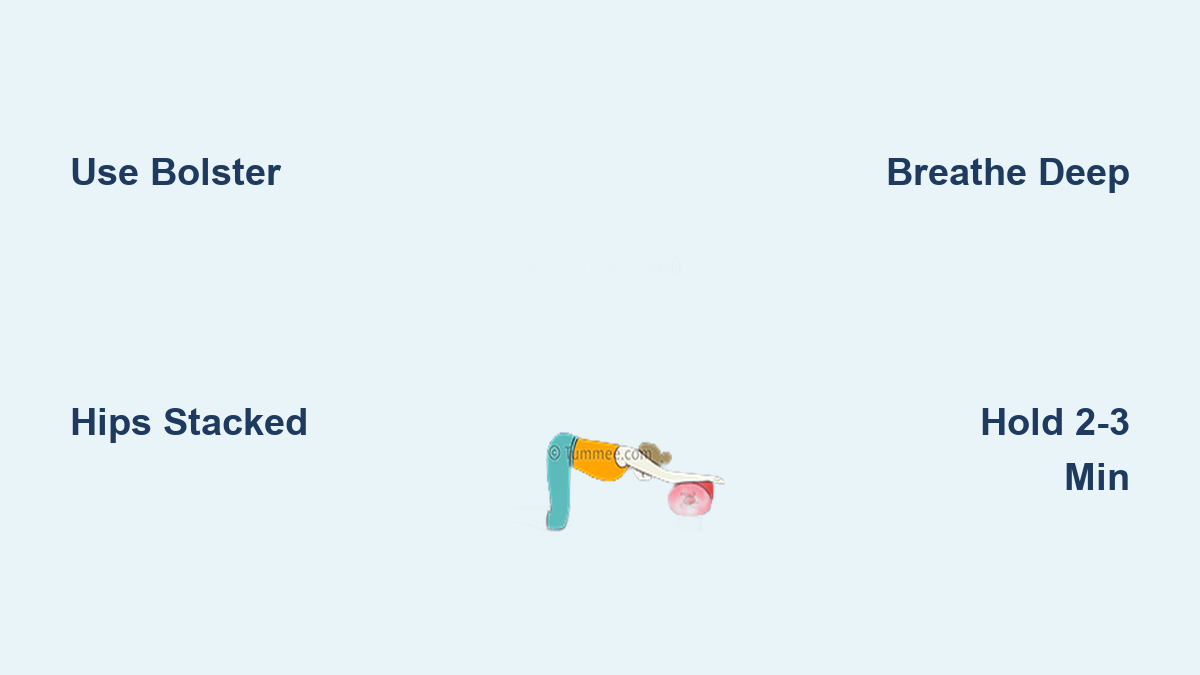
Puppy Pose with Bolster: Quick Steps
If your upper back feels locked in a knot after hours hunched over a laptop or phone, puppy pose with bolster offers a gentle path to release. This supported yoga variation, also known as Melting Heart Pose or Anahatasana, uses a prop to let gravity do the work. The result is a decompressed spine and an open chest without any muscular effort on your part. Unlike active backbends that demand strength, this restorative posture invites you to simply let go.
You do not need flexibility to begin. With a bolster under your chest, you can experience deep release in just 2 to 3 minutes. Below, you will learn how to set it up safely, modify it for any body, and integrate it into your daily routine, even from a chair at work.
Set Up Your Support System
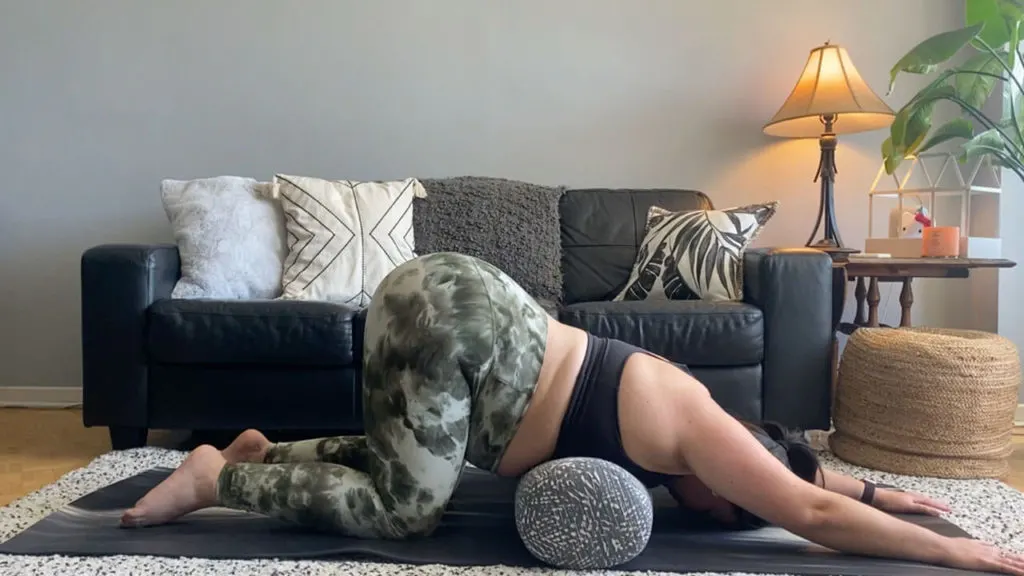
The right prop setup transforms puppy pose from a basic stretch into a full-body reset. Your goal is not to touch the floor but to create space and surrender your weight. Choose one of these configurations based on your needs and environment.
Choose the Right Prop
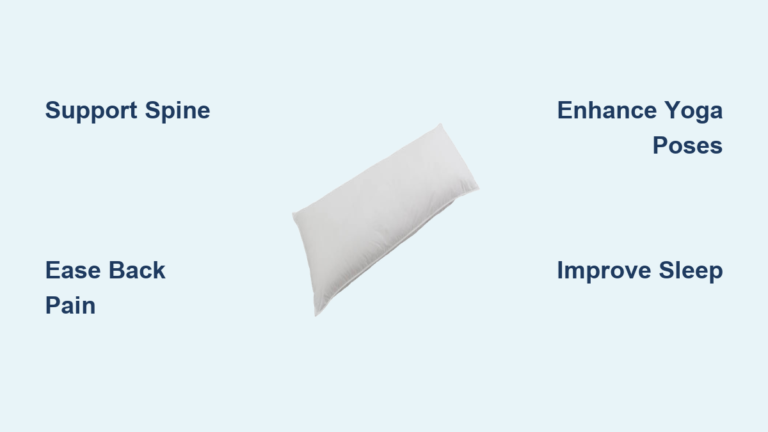
- Bolster: Best for deep relaxation. Place it vertically under your chest and forehead to fully support your upper body.
- Yoga Blocks: Elevate your hands to increase the upper back stretch. Two blocks, one under each hand, allow controlled intensity.
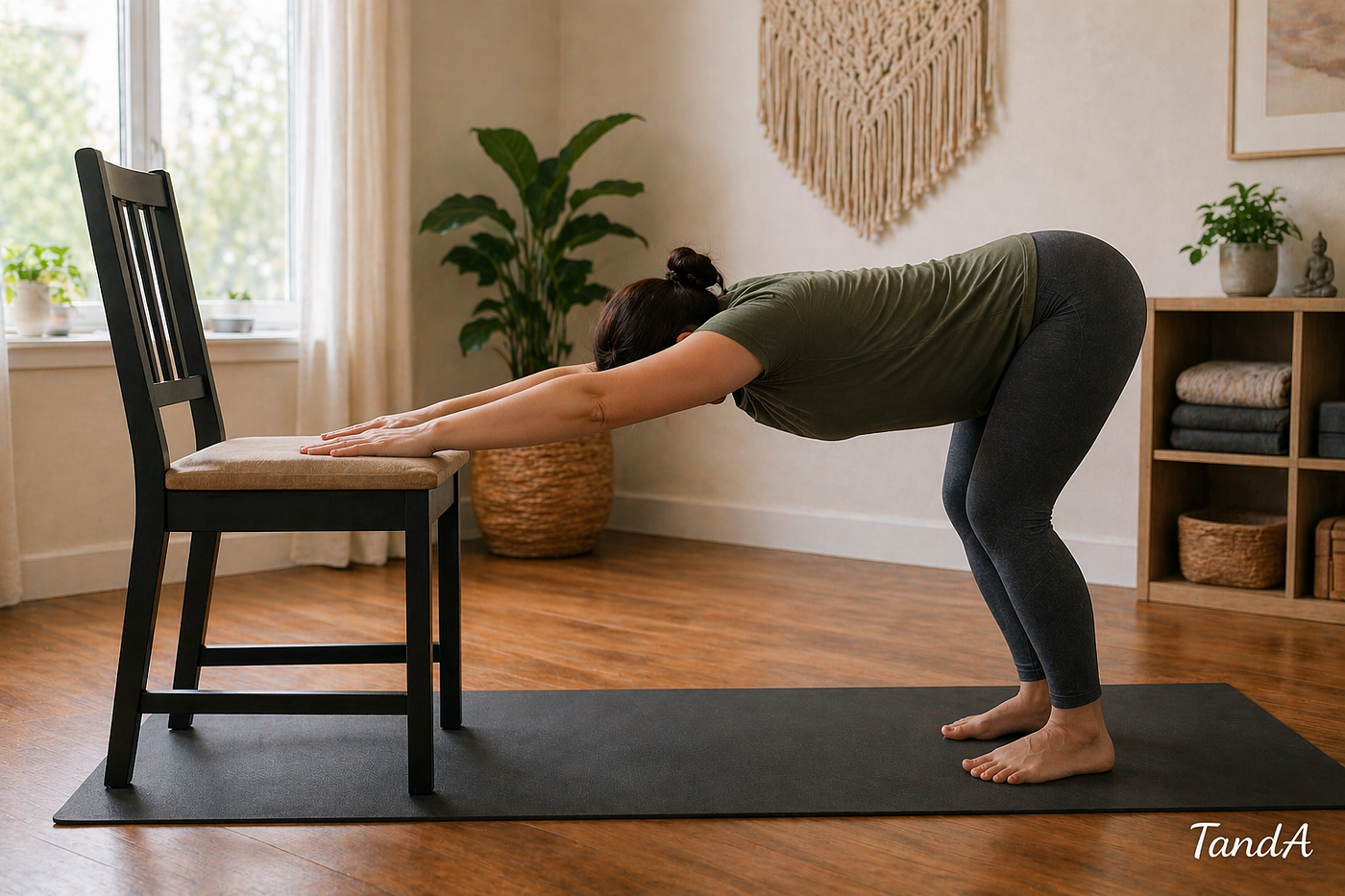
- Chair: For floor-free access. Kneel or stand and drape forward over the seat for similar spinal traction.
- Blanket: Fold under your knees if they feel sensitive or sore.
Each option maintains the pose’s core action: passive shoulder flexion and spinal lengthening.
Bolster Placement Guide
- Kneel on your mat with hips stacked over knees.
- Position a firm bolster vertically in front of you.
- Walk your hands forward and lower your chest and forehead onto the bolster.
- Keep your arms extended or let your elbows rest wide.
- Ensure your hips stay stacked or shift slightly back. Never collapse into the lower back.
This configuration supports complete relaxation, making it perfect for evening wind-downs or stress relief.
Align to Release, Not Force
Proper alignment ensures safety and maximizes the pose’s decompressive effect. The focus is on length, not depth. Avoid pushing your chest down. Instead, melt it forward and down with control.
Spine and Hip Positioning
- Lengthen the spine: Imagine a string pulling your tailbone up while your heart moves forward.
- Hips over knees: Maintain a straight line from hips to knees. If your lower back arches, shift your hips slightly back.
- Engage core lightly: A subtle lift in the abdomen protects the lumbar spine.
This creates gentle traction, increasing space between vertebrae and reducing compression from sitting.
Shoulder and Neck Cues
- Roll shoulders back: Draw shoulder blades down the back and away from the ears.
- Neck neutral: Let your head rest fully on the bolster. Avoid craning forward or tucking the chin excessively.
- Arms active or relaxed: For passive release, let your arms go soft. For mild engagement, press your palms gently into the bolster.
These micro-adjustments prevent strain and deepen the upper back opening.
Prep the Body in 5 Minutes
Jumping straight into puppy pose can feel jarring if your spine and hips are stiff. A short warm-up flow increases synovial fluid, warms tissues, and enhances the stretch.
Quick Mobility Sequence
Perform each movement for 30 to 60 seconds:
-
Cat–Cow with Hip Sways
Move slowly, adding lateral hip shifts to loosen the lower back. -
Hip Circles
Rotate clockwise and counterclockwise, 5 reps each direction, to free the pelvis. -
Glute Bridges (5 reps)
Lift your hips slowly, engaging glutes and hamstrings to open the front body. -
Reclined Figure Four (45 sec per side)
Lie on your back, cross one ankle over the opposite knee, and pull gently. -
Windshield Wipers (30 sec)
Keep knees bent and let them fall side to side to release the lower back.
Finish with a seated forward fold before transitioning into puppy pose.
Chair-Based Warm-Up for Desk Workers
No mat nearby? Try this between meetings:
- 10 Heel Raises
- 10 Supported Hip Hinges (hands on desk)
- 10 Half Squats (use chair for balance)
- 10 Down Dog Paddles (hands on desk, shift weight)
- 10 Seated Twists
These awaken the spine and hips, priming you for a supported forward drape.
Hold for 2 to 3 Minutes to Reset
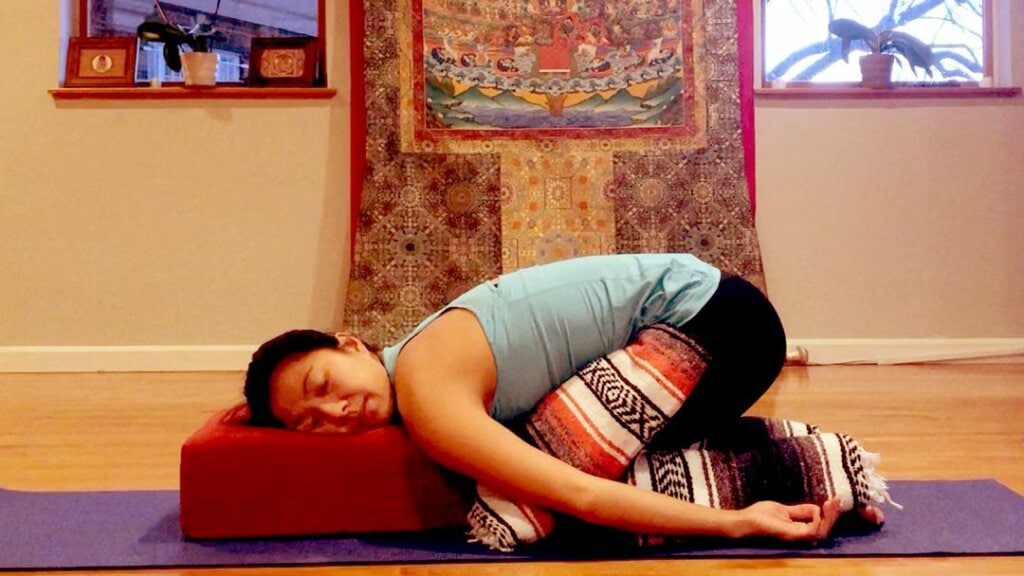
This is not a quick stretch. It is a nervous system shift. The ideal duration for puppy pose with bolster is 2 to 3 minutes, long enough to transition from stress mode to rest mode.
Why Time Matters
- Connective tissue release: Fascia responds slowly. A 2-minute hold allows layers of tension to melt.
- Breath deepens naturally: As the chest opens, diaphragmatic breathing improves.
- Mental reset: The mind shifts from doing to being.
Start with 60 seconds if you are new to the pose, then build up weekly.
Breathe Into the Upper Back
Instead of forcing movement, direct your breath to the tightest areas:
- Inhale: Expand your ribcage into the bolster.
- Exhale: Soften the space between your shoulder blades.
This visualization enhances awareness and encourages release in stiff areas.
Stay Passive, Stay Safe
Unlike Downward Dog, this pose is not about strength. Let your weight sink. If you feel effort, adjust the bolster height or bend your elbows slightly. The goal is surrender, not shape.
Modify for Any Body
Puppy pose with bolster is highly adaptable. Whether you have tight shoulders, sensitive knees, or cannot get on the floor, there is a version for you.
For Tight Shoulders
- Lower hand height: Place hands on blocks at their lowest level or keep palms flat on the floor.
- Widen arms: Angle elbows out like a cactus to reduce shoulder strain.
- Shorten the stance: Bring hands closer to knees to decrease the stretch intensity.
These tweaks prevent sharp pain while still targeting the upper back.
For Knee Sensitivity
- Fold a blanket: Place it under both knees for cushioning.
- Use a towel: Slide it under knees if your mat is thin.
- Try the chair version: This eliminates knee pressure entirely.
Comfort ensures you can hold the pose long enough for real release.
Chair-Supported Puppy Pose
Perfect for office breaks or limited mobility:
- Sit on the edge of a sturdy chair.
- Walk your feet back, hinge at the hips, and drape forward.
- Rest your chest and forehead on the seat or a cushion.
- Let your arms hang or rest on the chair.
You will still get spinal traction and chest opening, no floor required.
Use Cases: When to Practice
Timing your puppy pose with bolster session boosts its impact. Match the variation to your daily rhythm.
Morning Wake-Up Flow
Pair with Cat–Cow and a seated twist to release overnight stiffness. A 2-minute hold wakes up the spine and sets a calm tone for the day.
Mid-Day Reset (Chair Version)
Combat afternoon slump with a 5-minute break:
- 1 min Heel Raises plus Hip Hinges
- 2 min Chair Puppy Pose
- 1 min Deep Breathing
This instantly resets posture and focus.
Evening Wind-Down
As a pre-sleep ritual, the full floor version calms the nervous system. Add dim lighting and slow breath for maximum relaxation.
Pre-Yoga Warm-Up
Before backbends or arm balances, use 60 seconds in puppy pose to open the shoulders passively. No strain, all benefit.
Avoid Common Mistakes
Even gentle poses can go wrong if alignment or intention is off. Watch for these pitfalls.
Forcing the Chest Down
Mistake: Pushing to touch the floor.
Fix: Let the bolster support you. Depth comes with time, not force.
Collapsing in the Lower Back
Mistake: Hips too far forward, causing lumbar compression.
Fix: Stack hips over knees or shift back slightly. Engage lower abs lightly.
Holding Your Breath
Mistake: Tensing up and forgetting to breathe.
Fix: Use the cue “breathe into the upper back” to stay present.
Overusing Props
Mistake: Piling too many blocks or using a soft cushion.
Fix: Use a firm bolster or one block height. Stability matters more than height.
Track Your Progress
You will notice changes within days. Use these benchmarks to measure success.
Physical Signs of Improvement
- Easier deep breathing: Less tightness in the chest.
- Reduced upper back tension: Less need to crack your shoulders.
- Better posture: Shoulders naturally roll back without cueing.
- Increased mobility: Arms lift overhead with less effort.
These reflect real structural change, not just temporary relief.
Mental and Emotional Shifts
- Calm after practice: Noticeable reduction in mental chatter.
- Body awareness: You start feeling tension before it becomes pain.
- Less reactive: A quieter nervous system handles stress better.
These are signs the pose is working beyond the physical level.
Build a Sustainable Practice
Long-term benefits come from consistency, not intensity. Make puppy pose with bolster a habit with these strategies.
Start Small, Build Slow
- Week 1: 60 seconds daily
- Week 2: 90 seconds
- Week 3 and beyond: 2 to 3 minutes
Gradual progression prevents burnout and builds tolerance.
Pair With Complementary Poses
Create a mini-routine for balanced mobility:
- Reclined Figure Four: Releases hips
- Seated Twist: Improves spinal rotation
- Legs-Up-the-Wall: Enhances relaxation
This prevents over-focusing on one area.
Listen to Your Body
Some days you will feel open. Other days, stiff. Adjust prop height or skip the pose if injured. Respect your limits. This is not a competition.
Frequently Asked Questions About Puppy Pose with Bolster
What is the ideal duration for puppy pose with bolster?
The ideal hold time is 2 to 3 minutes. This allows the nervous system to shift from sympathetic to parasympathetic mode and gives connective tissue enough time to release layer by layer. Beginners can start with 60 seconds and build up gradually.
Can I do puppy pose with bolster if I have tight shoulders?
Yes. Tight shoulders actually make this pose more beneficial. To modify, place hands on blocks at their lowest level, widen your elbows like a cactus, or bring hands closer to your knees. These adjustments reduce strain while still targeting the upper back.
Is puppy pose with bolster safe for beginners?
Absolutely. The supported nature removes the fear of falling or strain, making it ideal for yoga novices. The bolster does the work of supporting your body weight, so no strength or flexibility is required to begin.
What can I use if I do not have a bolster?
You can substitute yoga blocks, a firm cushion, or even a chair. Blocks elevate the hands for a deeper upper back stretch, while a chair allows you to drape forward from a seated position. A folded blanket works well under sensitive knees.
How does puppy pose with bolster help with stress?
The pose stimulates the parasympathetic nervous system, shifting the body from fight-or-flight to rest-and-digest mode. As the chest and diaphragm open, breath capacity improves, which directly calms the mind. The 2 to 3 minute hold is long enough to create a noticeable mental reset.
Can I practice puppy pose with bolster every day?
Yes. Daily practice is safe and encouraged for best results. Start with shorter holds (60 seconds) if you are new, and progress to 2 to 3 minutes as your body adapts. Consistency yields better outcomes than occasional intense sessions.
Final Thoughts on Building a Puppy Pose with Bolster Practice
Puppy pose with bolster is more than a stretch. It is a daily reset for body and mind. By using support, you access deep release without strain, counteracting the effects of sitting, stress, and stiffness. Whether you are on the floor with a bolster or draping over a chair at work, the benefits are clear: better posture, freer breathing, and a calmer nervous system.
Set up your prop, align with care, and let go. In just 2 to 3 minutes, you are not just stretching. You are restoring. Start with 60 seconds today, and notice how your upper back, breath, and mood respond by the end of the week.