How to Dispose of a Futon: Easy Steps
Getting rid of an old futon is rarely as simple as leaving it by the curb for trash day. Most municipal waste services classify these bulky items as special waste, meaning standard trucks will not haul them away without a specific appointment or fee. You need a clear plan to dispose of a futon properly to avoid fines and unnecessary hassle.
This guide details every viable option for removing your unwanted furniture, from donation and recycling to professional junk removal. You will learn how to assess your futon’s condition, find local drop-off centers, and understand why hiring a pro might save you time and back strain.
Why Cities Ban Futons from Regular Trash Pickup
Bulky Waste Classification Rules
Most city trash programs explicitly exclude large furniture from standard collection. Municipalities categorize futons as “bulky waste,” which requires special handling procedures that regular garbage trucks cannot perform. Attempting to force a futon into a standard bin often results in the item being left behind.
Illegal Dumping Penalties
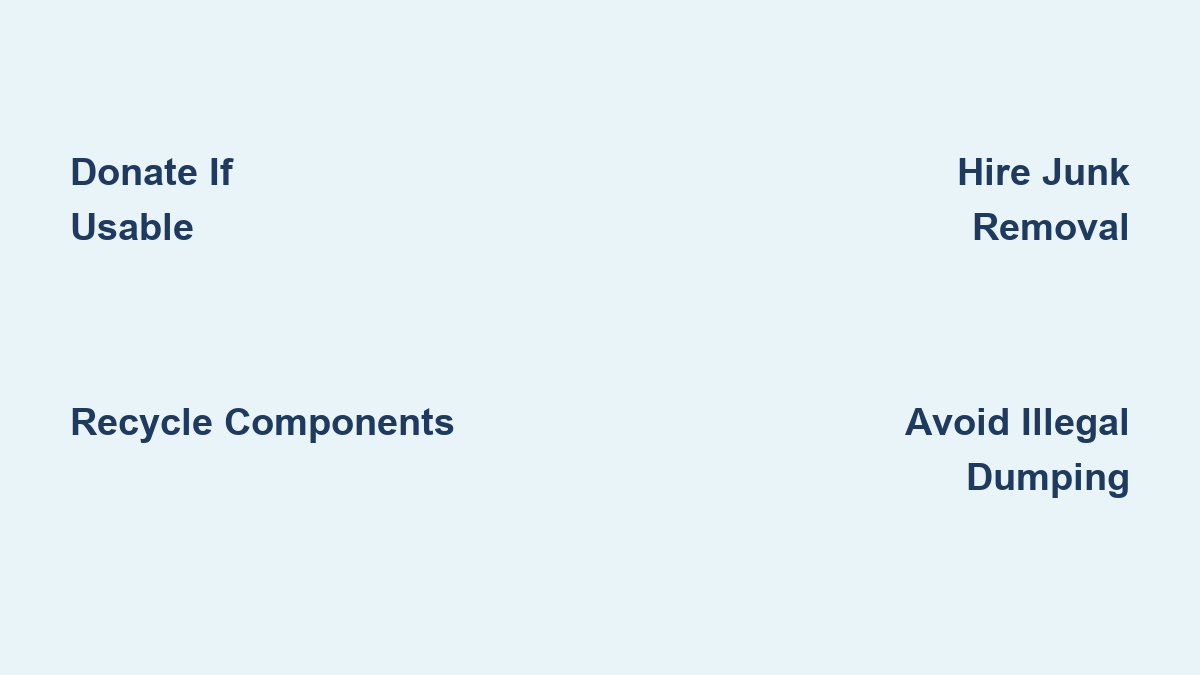
Leaving a futon on the sidewalk or near a community dumpster without a scheduled pickup constitutes illegal dumping. Local authorities view this as a violation that can lead to fines ranging from $50 to $500. Avoiding these penalties requires using approved disposal channels rather than abandoning the item.
Physical Barriers to Self-Removal
Futons are notoriously awkward to move due to their size and weight distribution. Navigating narrow hallways, stairwells, or apartment elevators with a folded futon often requires two people and significant physical effort. Without a large truck or trailer, transporting the item to a landfill yourself presents a major logistical challenge.
Donate Your Futon If It Is Still Usable

Assessing Condition for Charity Acceptance
Charitable organizations only accept furniture that is clean, functional, and free of major defects. Before attempting a donation, inspect your futon for sagging frames, large tears, or persistent odors. Items with mold, pet hair, or structural damage will likely be rejected by most thrift stores and shelters.
Where to Drop Off or Schedule Pickup
Several organizations may accept your gently used futon if it meets their quality standards. Consider these options for donation:
* Major Thrift Stores: Chains like Goodwill or The Salvation Army may accept futons, but policies vary by location.
* Local Shelters: Homeless shelters and domestic violence support centers often need furniture for residents.
* Community Groups: Use Facebook Buy Nothing groups or Freecycle to gift the item directly to neighbors.
* Student Housing: College students often seek affordable, multipurpose furniture at the start of semesters.
Pro Tip: When listing your futon online, include clear photos and explicitly state “free for pickup” to attract quick responses from people with trucks.
Recycle Broken Futon Components
Identifying Recyclable Materials
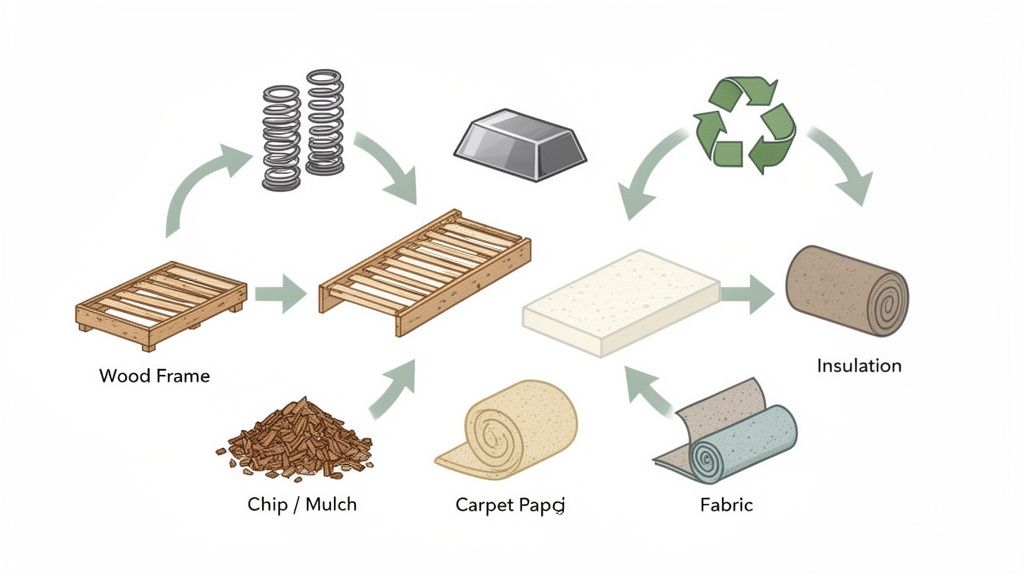
Even a destroyed futon contains valuable materials that should not end up in a landfill. You can separate the components to maximize recycling potential. Common recyclable parts include:
* Wood Frames: Can be chipped for mulch or used in biomass energy plants.
* Metal Springs: Highly sought after by scrap metal yards for melting and reuse.
* Foam Padding: Some specialized facilities convert polyurethane foam into carpet underlay.
* Textiles: Fabric covers can be repurposed into industrial rags or insulation material.
Locating Specialized Recycling Facilities
Not all recycling centers accept whole furniture items, so you must research local options carefully. Contact municipal transfer stations to ask if they sort bulky items onsite. You can also search specifically for “mattress recycling facilities” or “furniture recyclers” in your area. Some retail stores even offer take-back programs when you purchase new furniture.
Note: Always call recycling centers before driving there. Many facilities require appointments or have strict limits on the types of foam and wood they accept.
Hire Professionals to Remove Your Futon
Advantages of Full-Service Removal
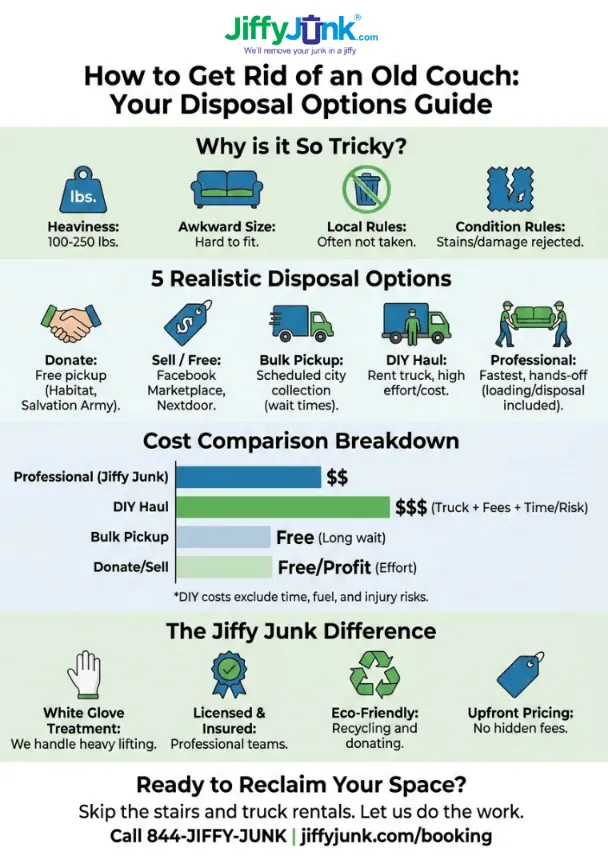
When donation is impossible and recycling is too complex, a professional junk removal service offers the most efficient solution. Companies like 1-800-GOT-JUNK? handle the entire process, eliminating the need for you to lift, load, or transport the item. This option is ideal for those who want to dispose of a futon without physical exertion or logistical stress.
Key Benefits Over DIY Methods
- Anywhere Pickup: Teams retrieve items from basements, third-floor apartments, or backyards.
- Same-Day Service: Many providers offer immediate scheduling, including evenings and weekends.
- Zero Preparation: You do not need to wrap, clean, or disassemble the futon.
- Eco-Friendly Disposal: Professionals sort items for donation or recycling before considering the landfill.
The Four-Step Removal Process
Professional removal follows a straightforward workflow designed for customer convenience.
1. Schedule Appointment: Book online or call to set a time; no deposit is usually required.
2. Receive an Estimate: A two-person team arrives within a scheduled window to provide an in-person quote.
3. Watch the Removal: The crew lifts, carries, and loads the futon while you watch or work elsewhere.
4. Enjoy a Clean Space: After loading, the team sweeps up any debris, leaving your area spotless.
Understanding Pricing Structures
Costs vary based on the volume of junk and your location. Single-item pricing applies if you only have one futon removed. Volume-based pricing is available if you are clearing out multiple pieces of furniture, where you pay based on the portion of the truck filled. Booking an in-person estimate is the best way to get an exact price.
Mistakes to Avoid When Disposing of Furniture
Abandoning Items on the Curb
Never leave a futon on the street hoping it will disappear. This action often triggers complaints from neighbors and results in fines from code enforcement officers. Standard garbage collectors will not take it, leaving you responsible for the violation.
Assuming All Charities Accept Large Furniture
Many thrift stores have limited storage space and cannot accept bulky items like futons. Dropping off a rejected item burdens the charity with disposal costs. Always call ahead to confirm acceptance policies before transporting your furniture.
Ignoring Safety During DIY Disassembly
If you attempt to break down the futon yourself, be cautious of hidden staples, sharp metal springs, and dust. Tearing into old foam can release fibers that pose respiratory risks. Proper protective gear is essential if you choose to dismantle the unit manually.
What Happens to Your Futon After Pickup?
Donation Pathways for Usable Goods
If your futon is in good condition, professional services prioritize donating it to local partners. This extends the life of the furniture and supports community programs. Charities receive much-needed resources while you clear your space, creating a positive cycle of reuse.
Recycling Processes for Damaged Items
Items too worn for donation go to specialized facilities for breakdown. Wood components become mulch or fuel, metal gets melted for new products, and textiles find use in industrial applications. These efforts significantly reduce the amount of waste sent to landfills.
Compare Futon Disposal Methods
| Method | Best For | Cost Estimate | Effort Level | Environmental Impact |
|---|---|---|---|---|
| Donation | Gently used, clean futons | Free | Medium | High |
| Recycling | Damaged frames, separated parts | $0–$50 | High | High |
| Junk Removal | Any condition, fast service needed | $100–$250 | None | Medium-High |
| DIY Hauling | Those with trucks and time | $20–$40 (fees) | Very High | Medium |
Bottom Line: Professional removal offers the best balance of speed and convenience, while donation provides the highest environmental benefit if your futon is still usable.
Final Tips for Stress-Free Futon Removal
Clear Space Before Buying New
Remove your old futon before purchasing a replacement to accurately measure your space and prevent clutter buildup. This strategy ensures you do not end up with two large items competing for room in your home.
Document Donations for Taxes
If you donate to a registered nonprofit, keep a receipt and take photos of the item. You may be eligible to claim a tax deduction for the fair market value of the donated furniture.
Check for Bulk Pickup Schedules
Some cities offer quarterly bulky item collection days. Check your local waste management website to see if you can schedule a legal curb pickup if you are on a tight budget and have patience.
Explore Upcycling Projects
Creative homeowners can repurpose futon frames into garden benches or use the fabric for moving blankets. Repurposing parts of the unit delays its entry into the waste stream entirely.
Frequently Asked Questions About Futon Disposal
Why should I hire a professional to dispose of my futon?
Hiring a professional saves you from physical injury and vehicle damage while ensuring responsible disposal. Teams handle all lifting and sorting, offering same-day service that municipal pickups cannot match.
How quickly can a junk removal team pick up my futon?
Many services offer same-day or next-day pickup, including evenings and weekends. Scheduling is flexible to fit your timeline, unlike rigid city bulk pickup schedules.
Do I need to clean or wrap my futon before pickup?
No preparation is required for professional removal services. The crew handles all lifting and loading directly from where the item sits, whether it is in a bedroom or basement.
What happens if my futon is too damaged to donate?
If the item cannot be donated, professionals take it to recycling facilities to recover wood, metal, and foam. Landfill disposal is always the last resort after all recycling options are exhausted.
Can I leave my futon by the dumpster for city pickup?
No, leaving large furniture by a dumpster is often considered illegal dumping and can result in fines. You must schedule a specific bulky waste pickup or use a removal service.
Are all parts of a futon recyclable?
Most components like wood frames, metal springs, and certain foams are recyclable. However, you must separate these materials or take them to facilities equipped to process bulky furniture.
Key Takeaways for Disposing of Your Futon
Properly managing futon disposal protects both your wallet and the environment. Whether you choose to donate a usable piece, recycle its components, or hire a professional team, avoiding illegal dumping is essential. Taking the right steps ensures your old furniture finds a new purpose or gets processed responsibly.
Ready to reclaim your space? Evaluate the condition of your futon today and select the disposal method that fits your schedule. For the fastest and safest results, consider booking a professional removal service to handle the heavy lifting and sorting for you.