Bolster Pillow Sizes: The Complete Guide
Ever struggled to find the right cover for your cylindrical cushion or wondered why a bolster looks awkward on your sofa? The answer lies in understanding bolster pillow sizes. These long, tubular pillows come in specific dimensions that must align with both furniture scale and functional needs. Unlike standard square throw pillows, bolsters require precise measurements to ensure proper fit, support, and visual harmony.
Choosing the wrong size can lead to a lumpy look, poor lumbar alignment, or a cover that refuses to close. Whether you’re styling a living room, supporting your back in bed, or designing custom upholstery, getting the dimensions right is essential. This guide breaks down standard bolster sizes, accurate measurement techniques, and how to match them to your space so you can buy, build, or style with confidence.
Standard Bolster Diameters and What They Mean
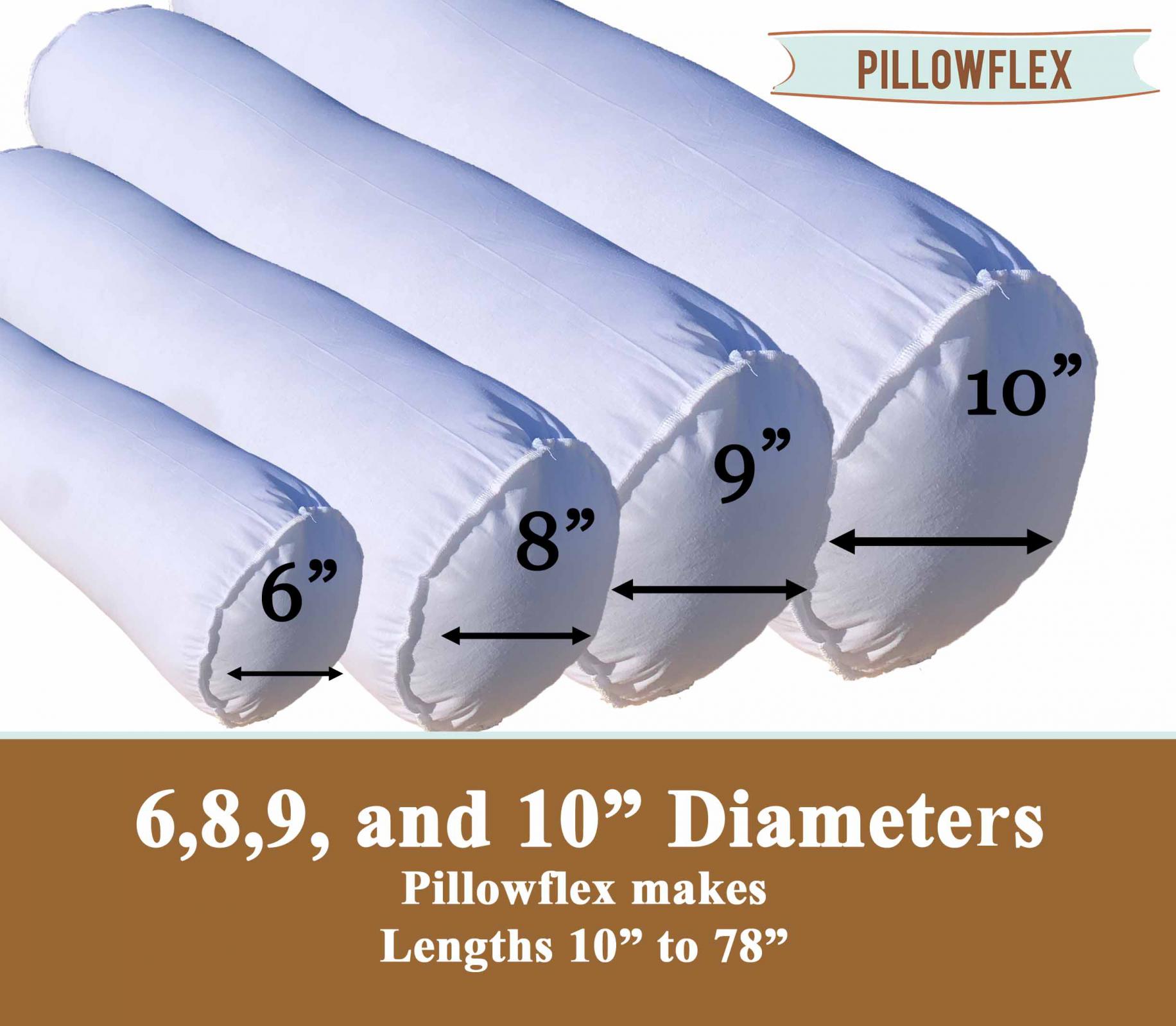
Bolster diameter determines thickness and support level. Most range from 6 to 12 inches, with 1-inch increments allowing for fine-tuned selection based on comfort and design goals.
Common Diameter Options for Bolster Pillows
- 6-inch: Slim profile, ideal for light accent use or children’s furniture.
- 8-inch: Mid-thickness, balances softness and structure for armrests and layered styling.
- 9-inch: Slightly fuller, often used in modern decor for a plump but not bulky look.
- 10-inch: Substantial feel, excellent for lumbar support on sofas and daybeds.
- 12-inch: Maximal volume, best for statement pieces or full back support.
These diameters are standard across retail and custom markets. Always verify the insert size before ordering a cover, especially when aiming for a tight, wrinkle-free fit.
Tight vs. Regular Fit Explained
How your bolster fits inside its cover affects appearance and durability:
- Regular Fit: Cover is 0.5 inches smaller than the insert and includes seam allowance. Allows slight give and easier insertion.
- Tight Fit: Cover is 1 inch smaller than the insert. Creates a firm, taut cylinder ideal for high-end styling.
For custom sewing, add 0.5 inches to the desired finished diameter when cutting fabric for a regular fit.
Key Bolster Lengths by Use Case

Length determines where a bolster works best. Too short and it looks lost; too long and it overwhelms. Match length to furniture scale and function.
Accent-Sized Bolsters (16 inches)
Perfect for small spaces:
- Ideal for armchairs, window seats, or corner accents.
- Adds visual interest without crowding.
- Often paired behind larger cushions for depth.
A 16-inch bolster brings structure to compact seating but lacks the reach for full back support.
Sofa-Standard Length (29 inches)
The go-to size for most living rooms:
- Fits neatly at the ends of a three-seater sofa.
- Provides balanced lumbar support.
- Works as a central statement when paired with square pillows.
This length avoids overhang on standard furniture and maintains clean lines.
Statement and Bed-Width Bolsters (36+ inches)
For bold impact:
- Used on large sectionals, daybeds, or as foot-of-bed rails.
- Matches queen or king bed widths.
- Delivers full back support when sitting up in bed.
These can feel awkward on small furniture, so reserve them for appropriately scaled pieces.
How to Measure a Bolster Correctly
Accurate measurement prevents costly mistakes, especially when ordering custom covers or inserts.
Use the Right Measuring Tools
- Use a rigid tape measure such as a carpenter’s tape or ruler. Soft tailor’s tapes curve with the pillow, leading to under-measurement.
- Measure along the longest axis for length.
- For diameter, measure straight across the top from base to peak.
Round to the Nearest Inch
Manufacturers use 1-inch increments. If your measurement is 10.3 inches in diameter, round down to 10 inches. If it is 10.6 inches, round up to 11 inches.
Always double-check measurements, especially with older or compressed inserts that may have lost loft.
Account for Closure Overlap
When sewing a cover:
- Add 2 inches to the fabric length to accommodate the overlap.
- For a 29-inch insert, cut fabric 31 inches long.
- This ensures the closure (zipper or envelope) functions smoothly without strain.
Best Bolster Sizes for Different Rooms
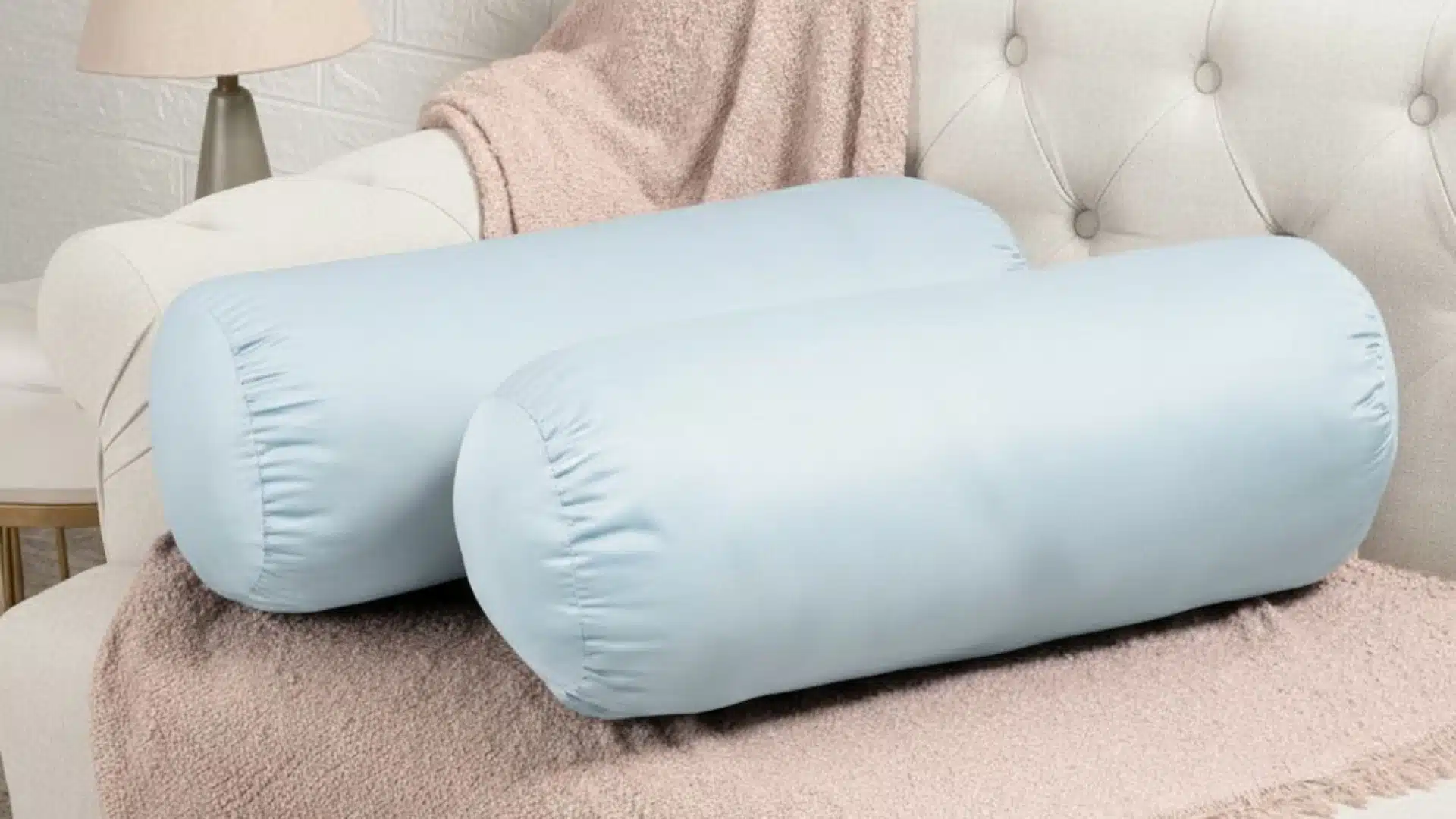
Matching bolster size to room scale enhances both comfort and design.
Living Room: Support and Style
- Primary use: Lumbar support, armrest padding, corner definition.
- Recommended sizes: 29-inch length with a 10-inch diameter.
- Pro tip: Place one at each end of the sofa for symmetry, or center a single 36-inch bolster for a modern look.
- Avoid overcrowding by limiting to one or two bolsters per three-seater sofa.
Bedroom: Function Meets Decor
- Headboard support: Use a 36-inch or bed-width bolster behind pillows for reading.
- Knee support: A 16- to 20-inch bolster between knees aligns the spine during side sleep.
- Foot-of-bed rail: A 36-inch or full-width bolster adds polish and doubles as a seat or book rest.
Floor and Nook Seating
- Floor seating: Choose 29- to 36-inch bolsters for casual lounging.
- Window seats: 29-inch length fits most bay windows; 10-inch diameter offers curved back support.
- Daybeds: Standard length is 36 to 40 inches, serving as both backrest and bed rail.
Fill Types and How They Affect Size

The internal fill influences how a bolster holds its shape and size over time.
Polyester Fiber (Most Common)
- 4 denier slick fiber: Soft, lump-resistant, and hypoallergenic.
- Feels full yet soft, making it ideal for decorative shams.
- May require fluffing; ends can become rounded over time.
- Maintenance: Spot clean or machine wash depending on cover; dries quickly.
Users report high satisfaction with plumpness, but some add extra polyfil to flatten rounded ends.
Down and Feather
- Luxuriously moldable and conforms to the body.
- Softer feel than polyester but offers less structural support.
- Requires professional cleaning and is not allergy-friendly unless encased.
Down-filled bolsters may compress more, appearing smaller over time.
Alternative Down (Synthetic)
- Mimics down feel with better durability.
- Often used in outdoor or high-use settings.
- Machine washable and fade-resistant.
Fabric Choices That Influence Fit

Material affects how snugly a cover fits and how long it lasts.
Natural Fibers (Cotton, Linen, Wool)
- Pros: Breathable, softens with age, ideal for bedrooms.
- Cons: Wrinkles easily and may shrink if washed improperly.
- Best for: Low-traffic, organic-modern spaces.
Linen bolsters benefit from a slightly looser fit to accommodate natural texture.
Performance Fabrics (Polyester, Canvas, Outdoor Weave)
- Pros: Stain-resistant, durable, holds shape well.
- Cons: Less breathable and can feel stiff initially.
- Best for: Family rooms, pet-friendly spaces, outdoor use.
These fabrics maintain tight fits longer and resist wear from daily use.
Texture Mixing Tips
- Combine smooth and textured fabrics such as velvet bolsters with linen squares for depth.
- Use bold textures in larger rooms and subtle weaves in small spaces.
- Ensure color harmony when mixing patterns and solids.
Styling Bolsters by Design Aesthetic
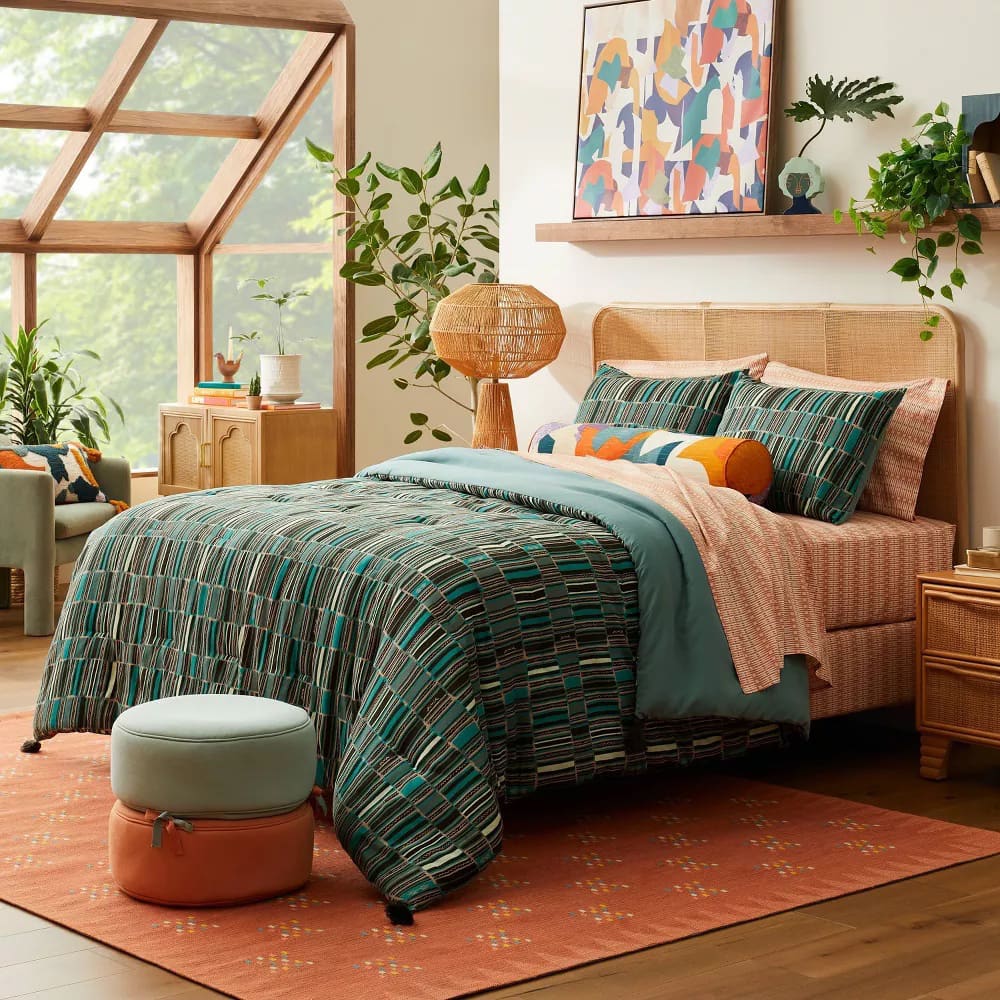
The right size and fabric enhance your room’s style.
Modern and Contemporary
- Sizes: 29-inch or 36-inch length with a 10-inch diameter.
- Fabrics: Crisp cotton, smooth polyester, neutral tones.
- Style tip: Use solid colors to emphasize clean lines and avoid tassels or piping.
Scandinavian
- Sizes: 29-inch length with an 8- to 9-inch diameter.
- Fabrics: Organic cotton, unbleached linen, wool blends.
- Colors: Soft whites, greys, nature-inspired blues and greens.
- Style tip: Let natural texture shine; wrinkles add character.
Industrial Chic
- Sizes: 36-inch length with a 10- to 12-inch diameter.
- Fabrics: Leather, heavy canvas, dark denim.
- Style tip: Let the bolster act as a structural element paired with metal or wood furniture.
Traditional and Vintage
- Sizes: 29-inch or 36-inch length with a 10-inch diameter.
- Fabrics: Velvet, silk, brocade with piping or tassels.
- Style tip: Use rich colors or classic patterns like damask or toile for elegance.
Care Tips to Maintain Size and Shape
Proper maintenance keeps your bolster looking full and fitting perfectly.
Clean Without Compromising Structure
- Vacuum weekly with an upholstery attachment to remove dust.
- Spot clean immediately and test cleaner on a hidden area first.
- Avoid full submersion unless the care label allows it.
- Never machine wash down-filled inserts as they clump and lose loft.
Polyester-filled bolsters can often be spot cleaned or professionally laundered.
Rotate for Even Wear
- Swap positions monthly from left to right sofa end.
- Rotate top to bottom to prevent one-sided flattening.
- Store off-season bolsters in breathable cotton bags and never plastic.
Refresh Flat or Lumpy Ends
- Fluff daily by squeezing and rolling.
- If ends mound, unzip and redistribute fill or add polyfil.
- For permanent reshaping, lightly steam the cover while avoiding direct contact.
Buying Guide: What to Look For
Choose bolsters that deliver on size accuracy, fullness, and durability.
Prioritize Fullness and Loft
Users consistently rate generously filled bolsters higher. Avoid under-stuffed options that flatten quickly and look cheap. Check product descriptions for terms like:
- Plump
- Ample stuffing
- Maintains loft
Verify Dimensional Accuracy
Especially for custom covers:
- Confirm exact length and diameter.
- Look for brands that state sizes exactly as listed.
- Read reviews for mentions of fit issues.
Check Shipping and Return Policies
- Secure boxing prevents compression during transit.
- Free shipping over $100 is common.
- 30-day returns allow you to test fit and feel.
Brands offering customization with off-standard sizes are ideal for designers and sewers.
Frequently Asked Questions About Bolster Pillow Sizes
What is the most common bolster pillow diameter?
The most common diameters range from 6 to 12 inches, with 8-inch, 9-inch, and 10-inch options being the most frequently stocked. The 10-inch diameter is especially popular for lumbar support on sofas and daybeds.
How do I measure a bolster for a custom cover?
Use a rigid tape measure along the longest axis for length and straight across the top for diameter. Round to the nearest whole inch and add 0.5 inches for seam allowance on regular-fit covers or 1 inch for tight-fit covers.
What length bolster works best for a standard sofa?
A 29-inch bolster is the standard length for three-seater sofas. It fits neatly at each end without overhang and provides balanced lumbar support for most adults.
Can I use a bed-width bolster on a small sofa?
Bed-width bolsters of 36 inches or longer can look awkward on small furniture. They are best reserved for large sectionals, daybeds, or appropriately scaled pieces where their full length can be appreciated.
What fill material keeps its shape best?
Polyester fiber fill, especially 4 denier slick fiber, maintains loft well and resists lumping. Down and feather fills are softer but compress more over time, requiring occasional fluffing or redistribution.
How tight should a bolster cover fit?
For a regular fit, the cover should be about 0.5 inches smaller than the insert. For a tight fit with a wrinkle-free appearance, the cover should be 1 inch smaller than the insert in both length and diameter.
Key Takeaways for Choosing the Right Bolster Pillow Sizes
Selecting the right bolster pillow sizes comes down to three core decisions: diameter, length, and fit type. A 10-inch diameter paired with a 29-inch length covers most living room needs, while 36-inch and bed-width options serve larger furniture and statement styling.
Always measure with a rigid tool, round to the nearest inch, and account for seam allowance and closure overlap when ordering custom covers. Match your bolster dimensions to your furniture scale, choose a fill that suits your comfort preferences, and select a fabric that aligns with your room’s traffic level and aesthetic.
Start by measuring your existing inserts or the space where you plan to place your bolster, then use this guide to find the perfect combination of size, fill, and fabric for your home.